
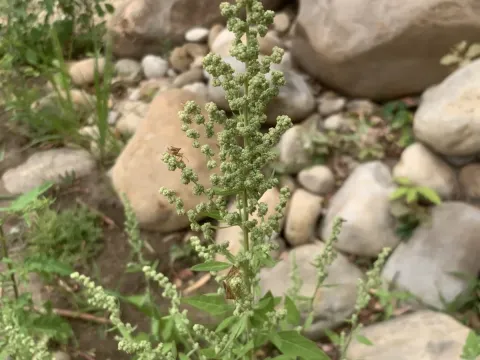
Upright goosefoot
Chenopodium strictum
Chenopodium strictum, commonly known as upright goosefoot, is an annual herb within the Amaranthaceae family. It is recognized for its robust growth habit during the primary agricultural season.
What the section contains
Upright goosefoot
The life cycle begins with seed germination triggered by warming soil temperatures in late spring. The plant exhibits high rates of seed production, ensuring persistence in various habitats.
Development proceeds rapidly, with the vegetative phase lasting throughout early summer. This rapid growth allows the plant to quickly dominate disturbed soils.
Flowering occurs mid-summer, leading to the development of numerous seeds that remain viable in the soil seed bank for extended periods of time.
Effective management requires precise timing of seedbed preparation to eliminate early cohorts of seedlings before the main crop reaches its critical stage.
The plant demonstrates significant ecological plasticity, allowing it to colonize diverse soil types, including sandy, loamy, and clay-rich substrates.
It flourishes in nutrient-rich environments, particularly those with high nitrogen availability. This preference makes it a common competitor in fertilized agricultural plots.
Upright goosefoot requires ample sunlight for optimal development. Shaded areas significantly impede its growth, making canopy closure a useful tool for natural suppression.
It maintains physiological stability under moderate moisture stress, showing better drought tolerance than many associated crop species.
Soil cultivation and the use of competitive cover crops are standard agricultural practices to suppress its presence and preserve soil resources for the primary crop.
While generally hardy, the plant can be susceptible to mild fungal infections, such as powdery mildew, especially under high humidity and poor air circulation conditions.
It serves as a reservoir for various insect pests, including aphids and leaf beetles, which can migrate to valuable crops during the growing season.
The primary agricultural threat posed by Chenopodium strictum is resource competition. It efficiently extracts water and minerals, which can lead to measurable yield reductions in infested fields.
Viral pathogens may sometimes persist in the plant tissues, posing a risk to sensitive vegetable crops grown in close proximity to infested areas.
Integrated weed management, incorporating both mechanical and chemical control strategies, is essential to minimize the economic impact of this species on field production.