
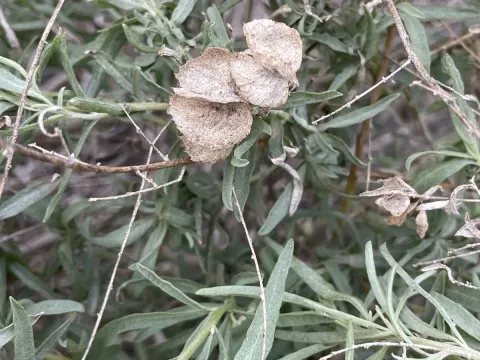
Fourwing saltbush
Atriplex canescens
Sowing of Fourwing saltbush is primarily conducted in the spring when soil temperatures reach 10-12 degrees Celsius. It is crucial to ensure sufficient soil moisture in the seed zone to support successful germination.
What the section contains
Fourwing saltbush
High-quality, cleaned seeds should be used for planting. The seeding rate varies depending on the chosen planting method; drilling ensures better uniformity, whereas broadcasting usually requires higher seed quantities.
Seed depth should not exceed 1.5 to 2 centimeters due to the moderate germination energy of the seeds. Firming the soil surface after planting promotes better seed-to-soil contact, which is essential for moisture uptake.
In regions with mild climates, late autumn seeding is possible, allowing the plants to take advantage of early spring moisture. However, this method carries risks related to temperature fluctuations and frost damage to seedlings.
Monitoring plant density after emergence is a vital management task. Thinning may be required to prevent overcrowding and reduce competition for essential nutrients and sunlight during the initial growth stages.
Fourwing saltbush is a perennial semi-shrub belonging to the Amaranthaceae family, known for its exceptional ecological adaptability. It thrives in extreme environments, including saline and alkaline soils where many other plants fail.
This species displays outstanding drought tolerance, making it a valuable candidate for introduction in arid and semi-arid regions. It can develop effectively even in areas with minimal annual rainfall.
The plant is not demanding regarding soil type, successfully growing in sandy, loamy, and rocky substrates. It acts as an effective soil stabilizer, preventing wind and water erosion in vulnerable areas.
It prefers alkaline soil conditions, thriving in pH ranges that would be unsuitable for most conventional crops. The plant is also highly tolerant to groundwater mineralization, a key trait for sustainable agriculture.
Abundant light is mandatory for optimal growth, as the plant is highly heliophilic. Shade negatively impacts both the growth rate and the forage quality, often leading to leggy and weak plant structures.
The biomass of Fourwing saltbush provides high nutritional value, especially during fall and winter when other forage sources are limited. Productivity levels are determined by plant age and local soil fertility.
Green mass yield can be significant under proper grazing management or mechanical harvesting. The plant shows strong regrowth capacity after being utilized, provided the root system remains undamaged.
Plantings can maintain productive longevity for 10 to 15 years under appropriate management practices. This longevity makes them a cornerstone for stabilizing feed resources in livestock operations in dry regions.
The chemical profile of the biomass includes high protein and mineral content. This ensures balanced nutrition for small ruminants, which is well-documented in rangeland management studies.
Grazing management is essential to prevent overutilization, which can deplete carbohydrate reserves in the roots. Avoiding heavy grazing in the first year is recommended to ensure robust establishment of the stand.
Fourwing saltbush possesses strong natural resistance to many common pathogens. Fungal infections of the foliage can occur only under conditions of excessive humidity and poor air circulation.
Insects like weevils and various caterpillars may occasionally damage leaves and tender shoots. However, economic damage is rare, and the plant usually recovers without the need for chemical intervention.
Weed competition poses a threat primarily during the early establishment phase. Once the plant has developed its deep and extensive root system, it competes very effectively with surrounding flora.
Root rot can occur in waterlogged soils, making site selection the most important preventative measure. Stagnant water is detrimental to the survival and performance of this shrub.
Integrated pest management, including crop rotation and the removal of local infestation hotbeds, is sufficient for commercial-scale operations. Pesticide use on grazing lands should be minimized to protect livestock.
Seed harvesting should be performed during the phase of full maturity when seeds reach their characteristic color. Mechanized harvesting is standard practice, using combines adjusted specifically for seed collection.
For forage production, harvesting should be performed before the stems become overly lignified. Maintaining a stubble height of 10-15 centimeters is critical to allow for rapid regrowth after mechanical cutting.
The harvested mass must be wilted in the field to reach a moisture content safe for storage. Ensilage is an alternative method, which can help in preserving beta-carotene and protein content.
Monitoring moisture levels during storage is vital to prevent spoilage and mold growth. Properly dried Fourwing saltbush forage can be stored for extended periods without significant nutrient loss.
Post-harvest residues serve as excellent mulch, contributing to soil moisture retention and protection against wind erosion during the dormant season.