
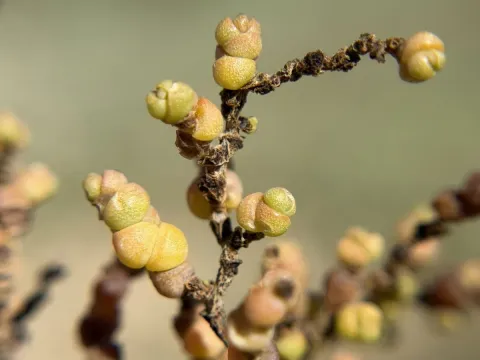
Allenrolfea
Allenrolfea
In its natural habitat, Allenrolfea propagates via seeds dispersed by wind or water across saline flats. For agricultural cultivation, seeds are sown following periods of rainfall when the concentration of salts in the topsoil is temporarily reduced, which facilitates better germination rates.
What the section contains
Allenrolfea
The optimal temperature range for germinating these seeds is between 20 and 25 degrees Celsius. Seeds should be sown at a minimal depth, as they require high levels of aeration to thrive and may struggle to emerge if buried too deeply in the soil.
Consistent moisture levels in the substrate are critical during the first few weeks of seedling development. The plant demonstrates high germination energy specifically on substrates that feature salt crusts, which mimic its natural environment.
Proper soil preparation for Allenrolfea involves light cultivation to ensure a stable seedbed without drying out the upper layer. In regions with harsh climates, it is recommended to sow seeds during the autumn and winter months, allowing for natural stratification.
For commercial-scale farming, sparse sowing patterns are advised. The mature plants possess extensive root systems and require significant space to reach their full potential, ensuring optimal air circulation around the foliage.
Allenrolfea is a member of the Amaranthaceae family and functions as a succulent halophyte, specifically evolved to thrive in environments with extreme soil salinity. It is capable of growing in areas where traditional crops fail due to high osmotic pressure.
The plant requires sunny locations with high solar radiation, as it does not tolerate shading and depends on intense photosynthesis to maintain its succulent tissues. It shows remarkable resilience during drought periods by storing water in its stems.
The soil for Allenrolfea should ideally contain high concentrations of sodium chloride, sulfates, or carbonates. As a hyperaccumulator of salts, the plant is an excellent candidate for phytoremediation projects aimed at reclaiming degraded saline land.
Climatic requirements focus on high summer temperatures and a frost-free growing season. In cooler climates or during sudden temperature drops, the growth rate of the culture slows down, and it may lose some of its vibrant foliage.
A sound agricultural strategy includes occasional irrigation with low-salinity water to maintain tissue turgor, especially during the flowering and fruiting stages, which helps maximize overall biomass production.
The yield of Allenrolfea is directly dependent on soil salinity levels and moisture availability. In highly saline conditions, this crop produces a significant amount of biomass that can be harvested and potentially used as an unconventional forage source.
Dry matter yields typically range from 2 to 5 tons per hectare, depending on local conditions. When cultivated using drip irrigation with saline water, productivity can be significantly enhanced, showing promise for large-scale agricultural projects.
The economic value of this crop lies in its ability to generate yields on land otherwise unsuitable for cereal or standard forage production. This makes Allenrolfea a strategic asset for regions struggling with secondary soil salinization.
Regular pruning of side shoots stimulates dense vegetative growth, allowing for multiple harvests within a single growing season. Proper management of the plantation layout is essential for optimizing harvesting efficiency.
In addition to biomass, the seeds possess high nutritional value. However, harvesting them requires specialized equipment due to their extremely small size and the fragile nature of the fruit husks as they reach maturity.
Allenrolfea possesses strong natural resistance to most common agricultural pests, primarily because the accumulation of salts in its tissues makes the plant unattractive to most typical herbivores. This trait significantly reduces the need for chemical pesticide application.
The primary threat to the crop is root rot, which may occur due to waterlogging or poor soil aeration. Excessive moisture, especially when coupled with low ambient temperatures, can lead to fungal pathogens attacking the root collar.
While pests such as grasshoppers or specific weevils may occasionally damage tender terminal shoots, they rarely reach levels that threaten the entire plantation. Biological control methods are usually sufficient to manage such localized outbreaks.
Competition from weeds is minimal, as few plant species can tolerate the high salt levels that Allenrolfea thrives in. Nevertheless, young seedlings might require protection from aggressive halophytic weeds during the initial stages of establishment.
Routine phytosanitary monitoring is essential to identify early signs of stress or disease. Keeping the plantation well-managed ensures that the density of the crop remains high, preventing the establishment of unwanted vegetation.