
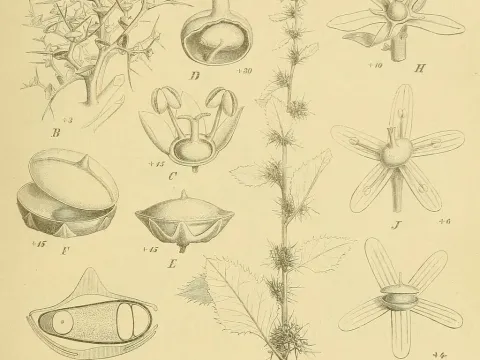
Acroglochin
Acroglochin
Acroglochin belongs to the Amaranthaceae family and is native to the high-altitude mountainous regions of Central Asia, where it has adapted to harsh environmental conditions.
What the section contains

Acroglochin
For cultivation purposes, sowing should take place when soil temperatures consistently reach 10–12 degrees Celsius to ensure rapid and uniform seed germination.
The seeding depth is critical; it should be shallow, generally not exceeding 2–3 centimeters, as the small seeds lack the energy to push through deep soil layers.
Farmers are advised to prepare a fine, weed-free seedbed to minimize competition during the critical early stages of the plant's development cycle.
Depending on the intended use, such as grain production or biomass harvesting, seeding rates should be adjusted to achieve the optimal plant density per square meter.
This crop thrives in well-lit environments, having evolved to tolerate the high solar radiation characteristic of its native mountain habitats.
Acroglochin prefers light-textured, well-draining soils that prevent moisture stagnation, which is essential to avoid root rot and other moisture-related pathologies.
It displays high tolerance to drought stress, as its root system is well-developed to explore deep soil profiles for moisture during dry seasonal periods.
Maintaining a neutral soil pH is beneficial for nutrient uptake, particularly for essential micronutrients that support robust vegetative and reproductive growth.
Adequate soil aeration is necessary to support root metabolism; therefore, periodic cultivation or inter-row hoeing is recommended in intensive farming systems.
The grain yield potential of Acroglochin is strongly influenced by the availability of nitrogen during the vegetative growth phase and stable moisture levels during flowering.
When cultivated as a forage crop, it provides substantial biomass, which can be harvested multiple times depending on the growing season length and plant vigor.
As a resilient crop, it offers yield stability in regions where climate fluctuations often compromise the performance of more sensitive cereal crops.
Economic assessments indicate that Acroglochin can be a valuable niche crop, provided that market demand for its specific nutritional profile is identified.
Effective management strategies that focus on weed control and balanced nutrition can significantly enhance the total output per hectare for the producer.
Fungal diseases, particularly those affecting the foliage and stems, are the primary biological threats, especially during periods of high humidity or excessive precipitation.
Insect pests, including various leaf beetles and weevils common to the Amaranthaceae family, can significantly reduce productivity if left unmanaged during the peak season.
Weed management is a priority, as Acroglochin seedlings are relatively slow to establish and can be easily overwhelmed by faster-growing competitive weeds.
Implementing a diverse crop rotation is a vital preventive measure to disrupt the life cycles of soil-borne pathogens and maintain field productivity over time.
- Frequent scouting for pest outbreaks.
- Application of sustainable, integrated pest management practices.
- Seed treatments to prevent early-stage damping-off.
The harvest timing for grain is determined by the maturation of the seeds, characterized by a distinct color change in the plant's reproductive structures.
Harvesting machinery should be carefully calibrated to ensure gentle handling of the seeds, reducing the risk of mechanical damage to the seed coat.
For forage production, the optimal harvest window occurs before the plants reach full maturity to maximize the nutritional quality and digestibility of the herbage.
Post-harvest processing requires immediate drying of the material to reach safe moisture content levels, preventing spoilage and ensuring long-term shelf stability.
Proper cleaning and sorting after harvest are essential to remove debris and achieve the desired quality standards for either grain processing or seed usage.