
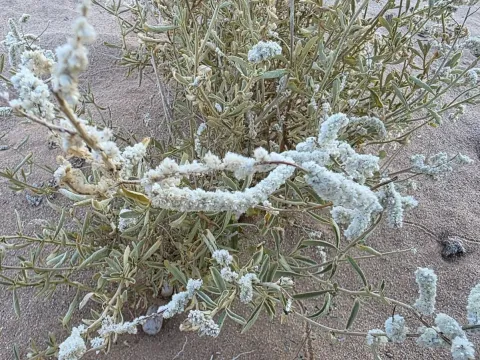
Aerva
Aerva Forssk.
Sowing Aerva lanata seeds in temperate climates is primarily performed using a seedling method. The optimal time for starting seeds indoors is late February or early March, which ensures a sufficient vegetation period before autumn approaches.
What the section contains

Aerva
For successful seed germination, a stable temperature ranging from 20 to 25 degrees Celsius is required. Seedlings typically emerge within 10 to 14 days, after which they must be provided with quality lighting to prevent stem elongation.
Transplanting into open ground should only occur after the threat of night frosts has passed, usually in late May. A recommended planting distance is 30x40 centimeters, which provides adequate space for each individual plant to flourish.
Direct sowing in soil is only feasible in tropical or subtropical climates, as the crop is highly heat-loving. When using the direct-sowing method, seeds should be sown at a depth of no more than 0.5 centimeters and covered with a light substrate.
To enhance germination rates, professional agronomists recommend pre-soaking seeds in growth stimulants. This practice results in more uniform and vigorous sprouts that are better equipped to handle the initial stress of transplantation.
Aerva is a perennial herbaceous plant belonging to the Amaranthaceae family. Naturally occurring in tropical zones across Asia and Africa, it possesses high requirements for sunlight and heat.
The crop prefers light, well-drained sandy or loamy soils with a neutral or slightly acidic pH. Waterlogging is detrimental to the plant, making areas with high groundwater levels unsuitable for commercial cultivation.
The plant exhibits high drought resistance; however, regular irrigation is necessary to achieve marketable biomass yield. During the active vegetative growth phase, maintaining moderate substrate moisture is crucial.
The optimal air temperature for healthy development is between 25 and 30 degrees Celsius. When temperatures drop below 10 degrees, growth processes effectively halt, and the plant is highly susceptible to death during frost conditions.
For successful farming, it is necessary to select open, wind-protected sites. The crop reacts extremely negatively to shading, which results in a significant decrease in the concentration of biologically active compounds within the aerial parts.
The primary value of Aerva lies in its aerial biomass, which is utilized by the pharmaceutical industry. Yields of dried herb depend directly on the quality of care, soil fertility, and mineral fertilization regimes.
Average yield of raw material under intensive farming conditions reaches 5–8 tons per hectare. After the drying and cleaning process, the output of ready-to-use medicinal raw material accounts for about 20–25% of the fresh weight.
Yield indicators increase significantly when applying two to three nitrogen-potassium fertilizations during the growing season. Nitrogen stimulates green mass accumulation, while potassium enhances the plant's overall immunity.
An important factor influencing final results is the plant density per unit area. Planting too sparsely fails to utilize the plot's potential, while excessive density leads to intense competition for light and nutrients.
The effectiveness of harvesting depends on strictly adhering to vegetation timelines. Early harvesting leads to insufficient biomass, while delayed harvesting leads to stem lignification and degraded raw material quality, which is critical for the pharmaceutical market.
Under natural conditions, Aerva rarely suffers from mass pest outbreaks due to its specific chemical composition. However, in agricultural settings, root rot may occur if the plant is subjected to over-irrigation.
Among pests, spider mites and aphids pose the greatest threat to young plants, particularly when grown in protected ground. Control measures involve the use of approved biological or systemic insecticides.
Powdery mildew may infect leaves under high humidity and poor air circulation. Prevention consists of thinning the plants and strictly adhering to root-zone irrigation to avoid wetting the foliage.
Soil-borne nematodes can become a problem if the crop is cultivated on the same plot for many years. It is highly recommended to follow a crop rotation cycle, returning to the same site no sooner than every 3–4 years.
Weeds pose a serious threat during the initial stages of development because Aerva grows slowly. Timely inter-row cultivation and weeding during the first month after planting are essential for protecting the young crop.
Harvesting is performed during the mass flowering phase, when the concentration of beneficial substances in the stems and leaves reaches its peak. This usually occurs 3 to 4 months after transplanting seedlings into the soil.
Plants are cut at a height of 5–10 centimeters from the soil level. In regions with a favorable climate, Aerva can produce regrowth, allowing for a second harvest of raw material before the arrival of cold weather.
The cut mass must be transported to the drying facility immediately. It is essential to avoid heating the harvested material, as this can trigger unwanted enzymatic processes and lead to a loss of quality.
Drying is performed in the shade, under canopies, or in specialized dryers at a temperature not exceeding 40 degrees Celsius. Excessive heat destroys active components, making strict microclimate control a priority.
Finished raw material should be stored in dry, dark, and well-ventilated areas within paper bags or specialized containers. When stored correctly, Aerva maintains its medicinal properties for 2 to 3 years.