
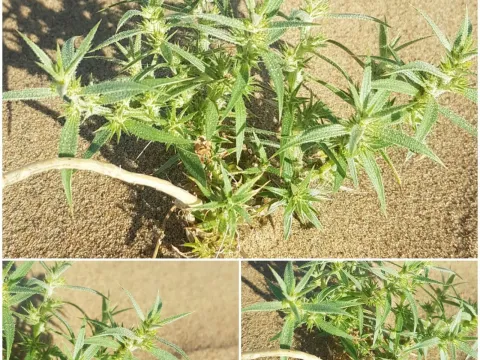
Agriophyllum
Agriophyllum
Agriophyllum is known as a pioneer plant species capable of thriving under extreme arid conditions. Sowing typically takes place in early spring, utilizing residual moisture in the soil to ensure successful germination and early development.
What the section contains

Agriophyllum
The seeds demonstrate high germination energy, allowing them to adapt rapidly to the fluctuating temperatures of desert environments. Sowing depth is usually kept shallow, around 1-2 centimeters, to facilitate optimal emergence in sandy soil conditions.
In natural habitats, the plant often propagates through self-seeding. When cultivated for agricultural purposes, density must be carefully managed to avoid excessive competition between seedlings, which could limit overall biomass production.
The vegetative period is relatively short, making it an efficient crop for regions with limited seasonal rainfall. It effectively manages its biological cycle to complete growth before the onset of the most intense summer heat.
Pre-sowing soil preparation should be minimal to maintain the natural soil structure and prevent wind erosion. Light harrowing is usually sufficient to create a favorable environment for the seeds.
Belonging to the Amaranthaceae family, Agriophyllum is a true xerophyte, perfectly adapted to environments with severe water scarcity and high solar radiation. It possesses a robust root system designed to extract deep-seated soil moisture.
The crop has low soil fertility requirements, performing exceptionally well on saline or sandy substrates where traditional crops would fail. Its ability to stabilize moving sands is a key feature in land restoration projects.
It thrives under high temperatures and handles significant daily thermal fluctuations with ease. Its resilience to heat makes it an ideal candidate for semi-desert and arid agricultural landscapes.
Agriophyllum does not require heavy fertilization, as it is evolved to operate efficiently in nutrient-poor environments. Maximizing sun exposure is the primary requirement for healthy growth and biomass accumulation.
Cultivation practices should focus on maintaining the fragile ecological balance of the site. Avoiding heavy machinery that could cause soil compaction is essential for the long-term success of the crop.
Yields of green biomass are heavily influenced by the amount of rainfall received during the critical growth phases. In favorable years, the plant provides a significant amount of nutritious forage for livestock.
Nutritional value is high, particularly during the flowering phase, when the plant contains optimal levels of protein and essential minerals. This makes it a preferred food source for camels and small ruminants in desert zones.
Seed yield is consistent enough to allow for natural regeneration, which is a significant advantage for maintaining perennial pastures without the need for constant human intervention or replanting.
As a soil-enriching agent, its performance is impressive. The root biomass contributes to soil organic matter, improving the physical properties of arid soils over time through repeated cultivation cycles.
Strategic management of grazing schedules allows for sustainable yield extraction while ensuring that enough biomass remains to protect the soil surface from erosion and facilitate future reseeding.
The most prominent threat to Agriophyllum populations is the damage caused by desert locusts and other migratory insects during mass outbreak years. Regular monitoring is essential to mitigate large-scale losses.
Diseases are infrequent due to the harsh, dry environment that limits the proliferation of most fungal and bacterial pathogens. Root rot can occur only under conditions of excessive artificial irrigation.
Overgrazing poses a serious threat to the longevity of the plant populations. If the livestock pressure exceeds the natural recovery rate, the seed bank in the soil can be severely depleted, leading to ecosystem collapse.
Weed competition can hinder the growth of young seedlings during the initial establishment phase. However, once established, the plant's aggressive growth habit typically outcompetes most other vegetation.
Anthropogenic factors, including improper land use and soil disturbance, can negate the plant's natural resilience. Sustainable practices are required to maintain the stability of the agroecosystem.
Harvesting for fodder is predominantly conducted through direct grazing, which is the most cost-effective and natural method for utilizing the crop in vast arid areas.
For seed collection, the harvest must be timed precisely with maturity to prevent natural shattering. Specialized equipment is often used to capture seeds efficiently while minimizing manual labor.
Hay production is possible if the crop is mowed at the end of the flowering stage, preserving the maximum nutritional content for winter fodder storage.
Harvesting operations should be designed to be low-impact, ensuring that the soil surface remains undisturbed. This is crucial for preventing the activation of wind erosion processes in sandy terrains.
Leaving plant residues on the field after the harvest is highly recommended to protect the soil from wind and heat, thereby contributing to the sustainability of the next growing cycle.