
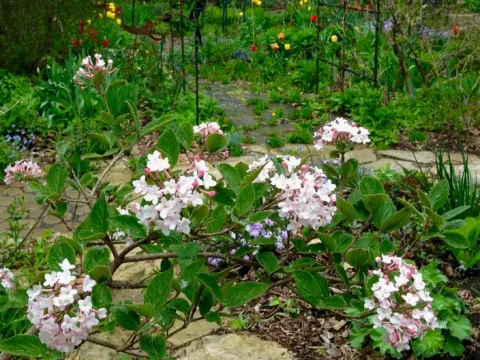
Judd viburnum
Viburnum juddii
Judd viburnum (Viburnum juddii) is a beautiful ornamental shrub belonging to the Adoxaceae family. It is a cross between Viburnum carlesii and Viburnum utile, known for its highly fragrant, snowball-like white flowers that appear in spring.
What the section contains
Judd viburnum
The plant thrives in full sun to partial shade conditions. It requires well-drained, fertile, and slightly acidic to neutral soil to reach its maximum growth potential. Poor drainage is the most common cause of root rot in this species.
Climate requirements for this culture are quite flexible, as it is relatively hardy in temperate zones. It performs best in regions where it is protected from harsh, drying winter winds, which can desiccate the buds and stems.
Maintenance involves regular watering during the first growing seasons to establish a strong root system. Once mature, the shrub becomes moderately drought-tolerant, although consistent moisture ensures better flowering.
In landscaping, Judd viburnum is used as a focal point specimen or in border plantings. Its compact habit and fragrant bloom make it a preferred choice for residential gardens and public landscapes alike.
Common pests affecting Judd viburnum include aphids, scale insects, and spider mites. These pests typically cluster on the undersides of leaves or on succulent new shoots, causing distortion and yellowing of the foliage.
Fungal issues such as powdery mildew are frequent in humid environments with poor air circulation. Symptoms include white dusty patches on the leaf surface, which can hinder the plant's photosynthetic capabilities.
Integrated pest management is recommended, starting with cultural practices like proper plant spacing and pruning for airflow. Chemical control should be used as a secondary measure if infestation levels exceed a specific threshold.
Regular monitoring of the plant during the growing season allows for early detection of potential threats. Removing infected plant debris during autumn is a crucial step to minimize the overwintering of pathogens.
Adequate fertilization with a balanced fertilizer in early spring supports the shrub's natural resistance. By maintaining a stress-free environment, growers can ensure the longevity and health of their Viburnum specimens.