
Japanese viburnum
Viburnum japonicum
Description
Growing requirements
The Japanese viburnum (Viburnum japonicum) is a broad-leaved evergreen shrub belonging to the Adoxaceae family. Native to Japan and Korea, it is prized for its lush, leathery foliage and its ability to maintain a vibrant green presence throughout the year in appropriate climates.
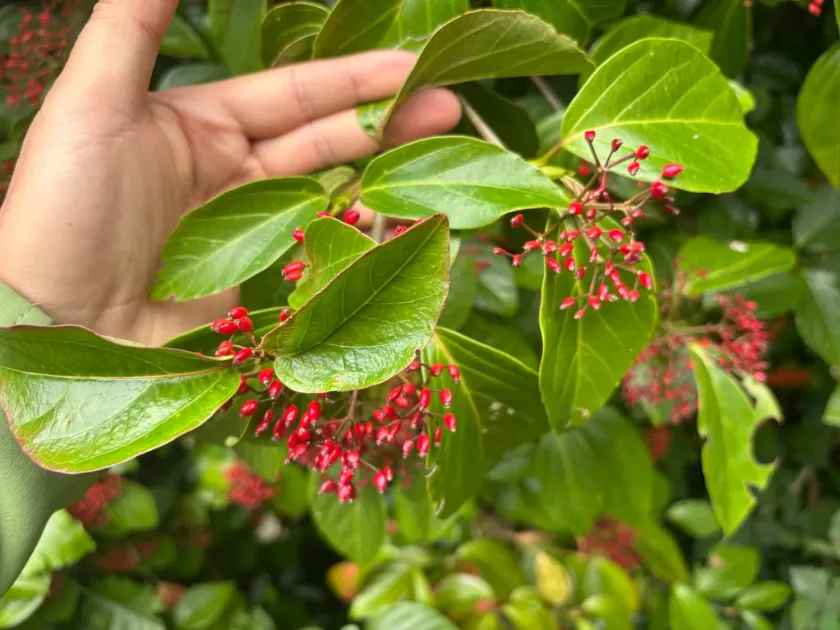
Botanically, this species is characterized by its glossy, oval-shaped leaves and terminal clusters of fragrant, white flowers that bloom in the spring. These are followed by small, red, berry-like drupes which provide additional visual interest during the late season.
To thrive, the plant requires moist, well-draining soil that is rich in organic matter. While it shows some tolerance to various conditions, it performs best in partial shade, where it is protected from the intense heat and harsh afternoon sun that can scorch its leaves.
Standard cultivation practices include consistent irrigation, especially during the establishment phase and periods of summer drought. Applying a thick layer of organic mulch around the base is highly recommended to regulate soil temperature and retain essential ground moisture.
In landscaping, this cultivar is widely used for privacy screens, foundation plantings, and hedge formation. Its structural habit and evergreen nature make it an excellent choice for architects seeking a reliable, low-maintenance green backdrop for garden designs.
Main diseases and pests
The primary pests affecting Japanese viburnum include aphids, which often congregate on new growth. If left unchecked, these insects can stunt development and spread viral pathogens, making regular scouting and early treatment with horticultural oils or sprays essential.
Fungal issues such as leaf spot and powdery mildew are common in humid environments with poor air circulation. To mitigate these risks, it is important to space plants adequately and prune branches to allow sunlight and wind to penetrate the center of the shrub.