
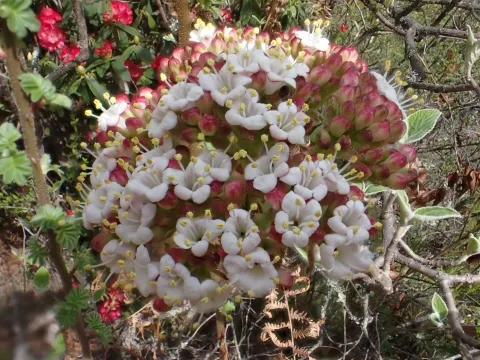
Viburnum cotinifolium
Viburnum cotinifolium
Viburnum cotinifolium, commonly known as the smoke-leaved viburnum, is a deciduous shrub belonging to the Adoxaceae family. Native to the Himalayan mountain range, this species thrives in high-altitude environments characterized by distinct seasonal changes and cool temperatures.
What the section contains
Viburnum cotinifolium
The plant requires well-drained, fertile soil to establish a healthy root system. It thrives in loamy substrates that retain moisture without becoming waterlogged, as poor drainage is a primary cause of stunted growth in this specific variety of viburnum.
Regarding light conditions, Viburnum cotinifolium prefers full sun for optimal flowering and foliage development. However, in regions with extremely intense summer heat, light partial shade is beneficial to prevent leaf scorch and ensure the plant remains vigorous throughout the season.
Agricultural management requires consistent watering schedules during the first few years after planting. Once established, the shrub becomes relatively hardy, though it benefits from periodic fertilization with balanced NPK formulas to promote steady growth and lush leaf production.
In landscaping, this species is highly valued for its compact habit and attractive, broad-ovate leaves. It serves as an excellent candidate for decorative borders, privacy screens, and mixed shrub borders, adding a naturalistic aesthetic to diverse garden designs.
Viburnum cotinifolium is generally robust, yet it can be susceptible to fungal issues like powdery mildew if air circulation is poor. Maintaining adequate spacing between plants is the most effective cultural practice to mitigate this risk and keep foliage healthy.
Pests such as aphids and leaf-eating beetles may occasionally target the new growth. Early intervention using horticultural soaps or neem oil is typically sufficient to manage localized infestations without causing harm to beneficial insects or the environment.
To ensure plant health, a regular pruning routine is recommended. Removing dead or crossing branches in late winter improves internal airflow, which directly reduces the likelihood of fungal spores settling on the inner sections of the shrub.
Soil management plays a crucial role in disease resistance. By maintaining a clean base around the trunk and removing fallen leaves in autumn, you can disrupt the life cycles of various pests and pathogens that may overwinter near the root zone.
Overall, providing a stable growing environment and monitoring for early signs of stress are key to the longevity of the shrub. A well-nourished plant, free from water stress, naturally exhibits greater resistance to common garden threats.