
Viburnum erubescens
Viburnum erubescens
Description
Growing requirements
Viburnum erubescens, commonly known as the blush viburnum, is a deciduous shrub or small tree belonging to the Adoxaceae family. It is native to the mountainous regions of the Himalayas, China, and parts of Southeast Asia, where it thrives in forest understories and along watercourses.
This shrub requires fertile, humus-rich, and well-drained soil to flourish. It prefers neutral to slightly acidic conditions and performs best when soil moisture is consistent throughout the growing season, mimicking its natural temperate forest environment.
For optimal growth, Viburnum erubescens should be placed in a location that receives partial shade to full sun. It is essential to provide protection from drying winds, which can damage the foliage and cause premature leaf drop during dry summer periods.
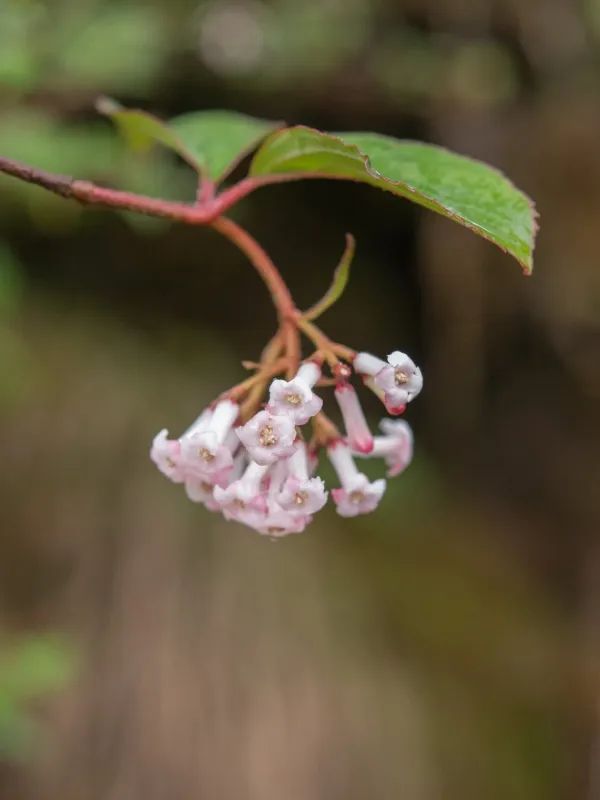
Botanically, the species is distinguished by its opposite, dentate leaves and pendulous clusters of white or pinkish flowers. Following pollination, the plant produces elliptical, bright red fruits that provide significant visual interest during the autumn months.
In terms of agricultural and horticultural use, this species is primarily valued for its ornamental appeal in gardens and public landscapes. It is frequently employed in woodland plantings or as a specimen shrub, adding texture and color to diverse planting schemes.
Main diseases and pests
Viburnum erubescens can be susceptible to common viburnum pests, such as the viburnum leaf beetle, which feeds on the foliage. Early detection and treatment with appropriate contact or systemic insecticides are recommended to prevent significant defoliation.
Powdery mildew represents the most prevalent fungal disease, particularly when plants are grown in overcrowded conditions with poor airflow. Maintaining proper spacing and pruning for aeration helps manage the humidity levels around the foliage.
Leaf spot diseases may occur in particularly humid or wet climates, leading to necrotic lesions on the leaves. Sanitation measures, such as removing and destroying fallen infected leaves, are vital to breaking the disease cycle within the garden environment.
Aphids are typical pests that congregate on tender new growth, causing curling and stunted development. Providing a habitat for beneficial predatory insects like ladybirds can often help control minor infestations naturally without the need for intensive chemical applications.
Root system health is critical, as waterlogged conditions can lead to root rot. Ensuring that the planting site has excellent drainage and avoiding soil compaction are fundamental aspects of successfully maintaining this shrub over the long term.