
Viburnum furcatum
Viburnum furcatum
Description
Growing requirements
Viburnum furcatum, commonly known as fork-leaved viburnum, is a deciduous shrub belonging to the Adoxaceae family. It is native to the temperate forests of East Asia, including the Russian Far East, Japan, and the Korean Peninsula.
This species thrives in moist, humus-rich soils with a slightly acidic to neutral pH. It is notably shade-tolerant, making it an excellent choice for woodland gardens or locations where sunlight is partially blocked by larger trees.
The plant requires consistent soil moisture to maintain its vitality and high aesthetic quality. During the summer months, providing adequate irrigation is essential, especially in regions experiencing periods of drought or excessive heat.
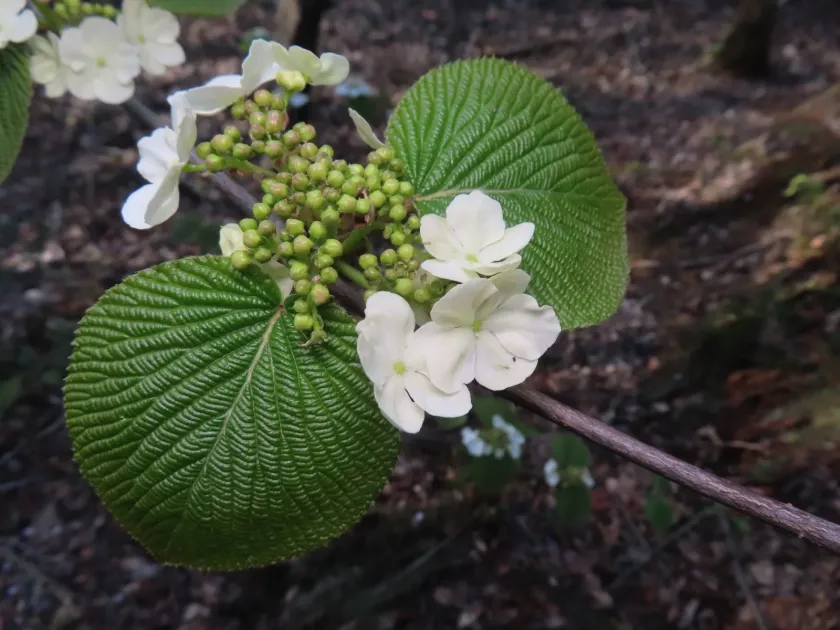
Botanically, Viburnum furcatum is characterized by its large, orbicular leaves with distinct, deeply impressed veins that create a textured appearance. The white, flat-topped flower clusters produce both fertile and sterile florets, followed by bright red drupes in autumn.
In terms of usage, this viburnum is primarily valued as an ornamental specimen. Its unique branching habit and vibrant autumn foliage make it a popular addition to naturalistic landscapes and botanical collections focused on East Asian flora.
Main diseases and pests
The most common pest affecting this species is the viburnum leaf beetle, which can cause severe defoliation if left unchecked during the spring and early summer months.
Fungal diseases, such as powdery mildew and various leaf spot pathogens, may occur if the shrub is planted in areas with poor air circulation or consistently stagnant humidity levels.
Root rot is a potential risk in poorly drained sites, particularly during exceptionally wet seasons, which necessitates selecting a location with excellent soil porosity.
Management strategies involve routine monitoring of the foliage, the application of appropriate biological or chemical insecticides, and the use of fungicides when environmental conditions favor disease spread.
Practicing good hygiene, such as removing fallen leaves at the end of the season, helps reduce the population of overwintering pests and prevents the buildup of fungal spores near the base of the plant.