
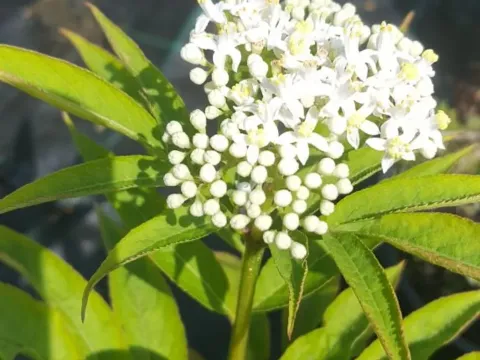
Adnate elder
Sambucus adnata
Adnate elder (Sambucus adnata) is a perennial herbaceous plant belonging to the Adoxaceae family. Unlike common woody elderberries, this species grows from a robust rootstock, producing upright stems each year.
What the section contains
Adnate elder
The plant originates from the mountain regions of East Asia, including China and the Himalayas. It is typically found in humid forests and near stream banks, thriving in cool, moist, and nutrient-rich environments.
For cultivation, it requires a semi-shaded site protected from harsh midday sun. The soil must be well-draining but consistently moist to support the vigorous growth of the rhizomes during the spring and summer periods.
Ideal soil for this culture is rich in organic matter with a slightly acidic to neutral pH. Incorporating compost or leaf mold at the time of planting significantly enhances the development and height of the annual shoots.
Agricultural management should focus on spacing. Due to its creeping rhizomatous habit, it is recommended to provide sufficient room or use physical root barriers to prevent the plant from dominating small garden areas.
Powdery mildew is the most prevalent disease affecting Sambucus adnata, particularly in dense plantings where airflow is restricted and humidity remains trapped within the foliage.
Aphids represent a frequent pest challenge, targeting the tender new growth in spring. Regular monitoring is essential to prevent significant sap loss and leaf curling, which can stunt the overall vigor of the plant.
Spider mites may appear during periods of prolonged drought or heat stress. Providing adequate moisture levels and ensuring plant health helps mitigate the risk of infestation by these pests.
Root rot remains a significant threat if the soil becomes waterlogged. Proper drainage is the single most important factor for preventing fungal infections in the root system of this species.
Sanitation practices, such as removing debris and thinning out weak or diseased stems at the end of the season, are critical for preventing the overwintering of pathogens and ensuring a healthy start for the following year.