
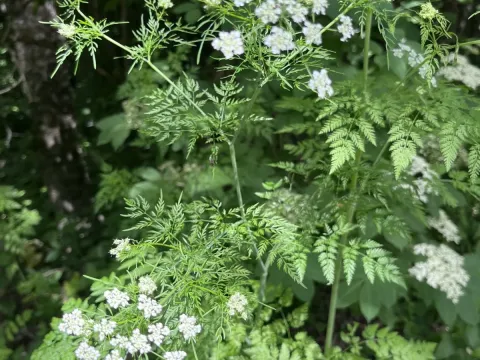
Turnip-rooted chervil
Chaerophyllum bulbosum L.
Turnip-rooted chervil, known botanically as Chaerophyllum bulbosum, is a biennial plant belonging to the Apiaceae family. It is best sown in the autumn to ensure proper germination after a cold winter period.
What the section contains
Turnip-rooted chervil
Direct sowing into the soil during late autumn, specifically in October or November, is essential. The seeds require a period of cold stratification to break dormancy and emerge successfully in the spring.
The seeds should be planted at a depth of 1 to 2 centimeters. Rows are typically spaced 25 to 30 centimeters apart to allow enough room for the roots to expand properly throughout the season.
Once seedlings emerge in the spring, thinning is mandatory to maintain a spacing of 10–15 centimeters between plants. This practice prevents competition and ensures that each plant develops a robust, fleshy root.
Growth during the early stages of development is relatively slow, making consistent weed control essential to prevent competition from vigorous weeds that could suppress the young chervil plants.
The plant thrives in fertile, loose, and well-drained soils. Loamy or sandy soil textures that are rich in organic matter provide the ideal environment for the roots to grow straight and smooth.
Proper water management is critical. While the soil should be kept consistently moist, avoiding waterlogged conditions is necessary to prevent root rot, a common issue in heavier, compacted soils.
Turnip-rooted chervil is highly frost-hardy and requires minimal winter protection. It is well-adapted to temperate climates, making it a reliable crop for gardens with cool, long spring seasons.
Preparing the ground with well-rotted compost prior to planting supplies the necessary nutrients. Avoiding excessive nitrogen application is recommended to ensure the plant directs energy to the root rather than foliage.
Exposure to light is beneficial, although the crop demonstrates a good tolerance for partial shade. Ensuring adequate spacing is the best way to optimize photosynthesis and root development.
The yield of turnip-rooted chervil is influenced by the quality of the soil and the intensity of the care provided. Well-managed patches can produce significant amounts of edible roots per square meter.
The roots are typically conical or turnip-shaped, reaching 10–15 centimeters in length. They are prized for their sweet, chestnut-like flavor, which develops most fully after the plant matures.
Historically used as a nutritious vegetable, it is gaining popularity as a gourmet root crop. It can be prepared in various ways, including roasting, boiling, or adding depth to hearty winter soups.
Proper thinning and weed maintenance are the most significant factors in maximizing the harvest. Larger spacing results in bigger, more marketable roots compared to overcrowded planting patterns.
In addition to the roots, the foliage can be used in small quantities, but the focus of production remains on the starch-rich tubers that develop during the plant's second growth phase.
The crop is generally hardy, but it can be susceptible to fungal infections such as root rot if the drainage in the soil is inadequate. Good soil structure is the best natural defense.
Pests like wireworms can damage the surface of the roots. Maintaining a healthy soil ecosystem and following strict crop rotation practices helps to minimize the presence of these problematic larvae.
Integrated pest management, including monitoring and manual removal of weeds, serves as a primary strategy to keep the crop healthy without relying heavily on chemical inputs.
Regular inspection of the foliage during the growing season allows for early detection of potential disease outbreaks, enabling prompt action before the infection reaches the root system.
Proper spacing is also vital, as better airflow between the plants reduces humidity around the crown, significantly lowering the risk of common fungal issues in the garden.
Harvesting typically occurs at the end of summer when the foliage begins to yellow and wither. This is the signal that the plant has redirected its nutrients into the root for storage.
The roots should be carefully lifted with a garden fork. Gentle handling is required to avoid scratching the skin, which can lead to rapid deterioration during storage after the harvest is complete.
Once lifted, the roots must be cleaned of excess soil and allowed to dry in a shaded, well-ventilated area for several days to prevent mold development and to harden the skin slightly.
For storage, keep the roots in a cool, dark environment such as a cellar. Placing them in containers with slightly damp sand helps maintain the necessary moisture levels and keeps the roots crisp.
Timing is crucial; delaying the harvest too long after the foliage dies back may cause the roots to re-sprout or lose their sweetness, affecting both taste and long-term storage quality.