
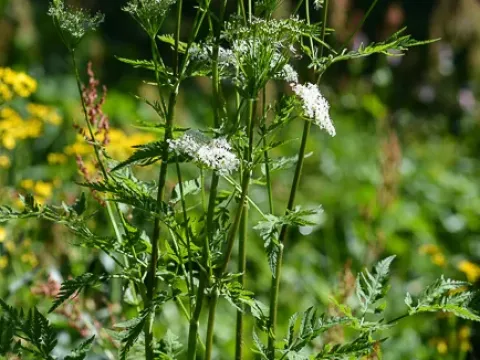
Chaerophyllum elegans
Chaerophyllum elegans
Chaerophyllum elegans is a member of the Apiaceae family. It is increasingly recognized in sustainable agriculture as a nutritious and aromatic green crop.
What the section contains
Chaerophyllum elegans
The optimal sowing time is early spring, once the soil has warmed up, or late autumn, which helps the seeds undergo necessary natural stratification during winter.
Seeds should be sown at a depth of 1.5–2 cm. Proper soil contact is vital to ensure a high germination rate and strong, uniform seedling development.
Spacing between rows is typically maintained at 30–45 cm to allow for efficient mechanical weed control and proper airflow throughout the development of the plants.
Slow initial growth is characteristic of this species, so weed management during the first few weeks after emergence is the most critical agricultural task.
The plant thrives in fertile, well-drained loamy soils. Avoiding waterlogged conditions is essential, as the roots are highly susceptible to decay in stagnant water.
Chaerophyllum elegans prefers neutral to slightly acidic soil conditions and benefits from organic matter enrichment before planting.
While the plant is shade-tolerant, it performs best in locations that receive dappled sunlight, making it suitable for intercropping in agroforestry systems.
The ideal temperature for vegetative growth is between 15°C and 20°C, and the plant shows remarkable resistance to lower temperatures once established.
Regular irrigation is required during the dry summer months to prevent premature bolting, which would negatively impact the quality of the foliage.
Yield stability for Chaerophyllum elegans is heavily dependent on maintaining optimal soil moisture and providing nitrogen-based fertilizers during the active growth phase.
Standard yields can reach 15–20 tons per hectare depending on the fertility of the soil and the specific management practices employed by the producer.
Professional growers focus on dense planting patterns that ensure a consistent supply of leaves throughout the harvesting season.
Market demand often dictates the harvest timing, with early harvests providing more tender leaves while later harvests offer higher biomass weight.
Systematic monitoring of the plant density allows for accurate yield predictions and efficient resource management throughout the growing cycle.
The primary threats to this crop include fungal issues like powdery mildew, which thrive in conditions of high humidity and poor air circulation.
Root rots caused by poor soil drainage are the most common cause of crop loss; therefore, selecting the right field site is a top priority.
Pests such as aphids and the carrot fly can severely affect the development of the foliage and root quality if not managed in a timely manner.
Integrated pest management (IPM) strategies, including crop rotation and the use of beneficial insects, are recommended to maintain plant health.
Cultural control methods such as maintaining adequate spacing help to mitigate the risk of disease spread within the plantation.
Harvesting is usually carried out when the plants reach 20–30 cm in height, ensuring the leaves are tender and rich in essential oils.
For those targeting fresh market sales, hand-harvesting or specialized green-crop harvesters are used to keep the product in optimal condition.
Post-harvest handling requires quick cooling to maintain shelf life and prevent the rapid wilting that often occurs after the plant is cut.
Quality control during harvest involves removing damaged leaves and ensuring the product is cleaned of soil particles before packing.
Storage should be conducted at low temperatures, near 0°C to 2°C, to ensure the product remains fresh and marketable for subsequent distribution.