
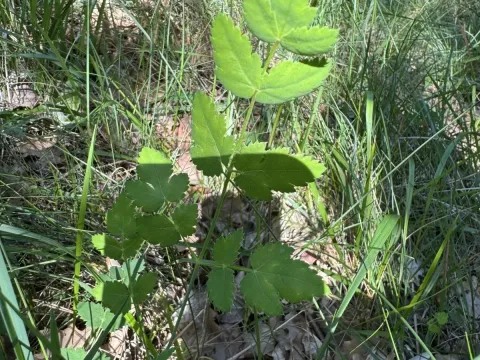
Cervaria
Peucedanum cervaria
Sowing seeds of Cervaria (Peucedanum cervaria) is primarily conducted in late autumn in open fields or in early spring following mandatory seed stratification. Mid-October is considered the optimal time, as cooling soil prepares the seeds for germination.
What the section contains
Cervaria
For spring sowing, seeds require exposure to low temperatures for two to three months, as they possess a deep dormancy state. Seeds should be planted at a depth of 1-2 centimeters, ensuring a firm contact with the moist soil for successful germination.
Row spacing during field cultivation should be 45-60 centimeters, allowing for mechanical weed control between rows. Seedlings emerge slowly, so maintaining soil moisture and preventing surface crusting is critical during the initial stages.
During the first year, the crop develops a robust basal leaf rosette and a taproot, focusing energy on adaptation. Intensive growth of the aerial parts generally begins in the second year of vegetation.
Seeding rates are calculated based on viability, typically requiring 1.5-2 grams per square meter. Using high-quality, viable seeds is the foundation for uniform stands and optimal field productivity.
Cervaria belongs to the Apiaceae family and has specific growth requirements, preferring sunny areas with light shade. The crop is highly sensitive to waterlogging and poor drainage, making fields with high groundwater levels unsuitable for production.
Ideal soils are fertile, well-drained loams or sandy loams with a neutral to slightly alkaline pH. The plant exhibits good drought tolerance due to its strong taproot that penetrates deep into the soil horizons.
Climatically, the species is cold-hardy and well-suited for temperate regions, though young plantings may require light protection during snowless winters with extreme frosts. Protection from strong winds is also important to prevent damage to flowering stalks.
Field management requires regular cultivation between rows to ensure soil aeration. Fertilizer applications should be focused on phosphorus and potassium to promote root development and enhance winter survival rates.
Given its perennial nature, the planting site should be selected with a crop rotation plan spanning 5 to 7 years. Cervaria does not tolerate frequent transplanting, as damage to the primary root significantly impairs the plant's long-term development.
The economic value of Cervaria lies in the accumulation of bioactive compounds within its roots and foliage. Green mass yields during regular harvesting reach approximately 1.5-2 tons per hectare, though root extraction is the primary commercial goal.
Root mass at maturity (usually in the 3rd or 4th year) can reach 5-8 tons per hectare under correct agricultural management. It is important to note that excessive harvesting pressure reduces the concentration of essential oils and coumarins in the plant tissues.
Seed production is variable and highly dependent on weather conditions during the flowering and ripening phases. In favorable years, farmers can harvest 300-400 kilograms of seeds per hectare for propagation purposes.
To improve high-quality yield, regular sanitary removal of weak or diseased individuals is recommended. This allows for better nutrient distribution and optimizes the quality of the harvested medicinal raw materials.
Yield stability relies on maintaining soil fertility and timely weed management, especially in the early stages when plants are vulnerable. When managed correctly, a plantation can maintain high productivity for several years.
Cervaria is relatively resistant to most common agricultural pests due to its specific chemical profile. However, poor field management can lead to aphid infestations, which feed on young shoots and flower stalks.
Fungal diseases, particularly powdery mildew, are the primary threat, often caused by overly dense planting and high humidity. Preventive measures include maintaining optimal spacing between plants and ensuring good soil drainage.
Root rot may occur in fields with poor drainage or heavy, waterlogged soils. In such cases, the root system degrades rapidly, causing the aerial parts of the plant to yellow and eventually die off.
Pests like weevils or certain caterpillar species may cause leaf damage, though they rarely cause critical losses. In industrial production, biological pest control is preferred to maintain the purity of the medicinal output.
Regular monitoring during the vegetative period helps identify infection spots early, preventing widespread outbreaks. Chemical fungicide usage is extremely limited and should only be employed as a last resort under strict adherence to safety intervals.
Root harvesting is performed in autumn, after the end of the vegetative season (late September to October), when the concentration of bioactive compounds is at its peak. Roots are carefully excavated, cleaned of soil, and washed in running water.
The foliage is harvested during the active flowering stage, typically in July or August. The harvested material must be dried quickly in a shaded, well-ventilated area to prevent leaf discoloration and the loss of essential oils.
Root drying requires specialized heat-controlled dryers, maintaining a temperature no higher than 45-50 degrees Celsius. Excessive heat leads to the degradation of volatile components, significantly lowering product quality.
Seeds are collected as they ripen, once the umbels take on a brownish hue. Prompt harvesting is necessary to prevent seed shedding; therefore, entire inflorescences are often cut and dried under cover.
After drying, the material undergoes sorting and impurity removal. The final product should be stored in paper or fabric bags in a dry, dark, and well-ventilated space, where it retains its properties for up to two years.