
Pitch pine
Pinus rigida Mill.
Sowing of Pinus rigida seeds in nurseries is typically performed in spring following a stratification period of 30–60 days at cool, positive temperatures. This pre-treatment is essential to ensure uniform germination and high seedling vigor in open field conditions.
What the section contains
Pitch pine
Fall sowing allows for natural stratification in the soil, though this method requires protective measures against rodents. The optimal sowing depth is 1 to 1.5 cm, consistent with the general standards for most pine species in commercial forest nurseries.
Maintaining proper sowing density is critical to avoid overcrowding, which significantly increases the risk of damping-off and other fungal infections. Row spacing is usually kept at 20–25 cm to facilitate mechanical weeding and nursery maintenance.
Applying regular irrigation and soil mulching during the first two years of growth is vital for rapid development. The use of root-growth stimulants helps produce robust planting stock that is well-adapted for translocation to forest sites.
Transplanting (pricking out) seedlings at one or two years of age is recommended to promote a dense, fibrous root system. High-quality seedlings must exhibit healthy, green needles and a firm terminal bud with no evidence of pest or mechanical injury.
Pitch pine, a member of the Pinaceae family, is highly regarded for its remarkable ecological plasticity. This species thrives on extremely nutrient-poor, rocky, and sandy soils where few other timber species can successfully establish themselves.
The tree is strongly light-demanding, necessitating open, unshaded sites for successful forest establishment. In its juvenile stage, the species demonstrates a notable tolerance for temporary waterlogging, allowing it to adapt to sites with fluctuating water tables.
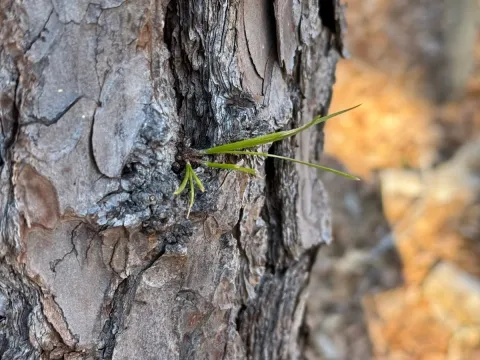
Pinus rigida possesses exceptional cold-hardiness and a unique capacity for epicormic sprouting after fire damage. This physiological resilience makes it a standout species for reforestation in environments prone to wildfire and harsh temperature fluctuations.
While indifferent to soil fertility, it prefers acidic to neutral substrates. In terms of agronomic practice, ensuring proper drainage is important in heavy clay soils, as stagnant moisture can impede root respiration and stunt overall growth.
Across its native range in North America, the species competes effectively in diverse habitats. Under cultivation, it requires minimal fertilization, as it is efficient at extracting nutrients from decaying organic matter in the forest floor.
The economic utilization of Pitch pine focuses on its medium-density, resinous timber. The wood is widely utilized in structural construction, the production of railroad ties, utility poles, and as a raw material for the pulp and paper industry.
In forestry management, the species is valued for its rapid regenerative capability, which facilitates sustainable selective harvesting. When managed correctly, trees can reach heights of 20–25 meters, providing a steady yield of industrial-grade timber.
Beyond traditional forestry, the species is frequently used in landscape architecture for the creation of windbreaks. Its resilience also makes it an essential tool for the reclamation of degraded lands and post-industrial brownfield sites.
Historically, the resin of Pinus rigida was an important source for turpentine and rosin. While large-scale extraction is currently limited, the biochemical potential of its needles and bark continues to be a subject of interest in pharmaceutical and chemical research.
Yield metrics in forest management are defined by standing timber volume per hectare, which often surpasses common pine species on poor-quality sites. Optimal rotation age ranges from 40 to 60 years, depending on the desired timber dimensions and end-use.
The primary threats to Pitch pine include wood-boring insects such as the pine sawyer and various bark beetle species. These pests can cause extensive damage to stands already stressed by drought, wildfire, or physical trunk damage.
Fungal pathogens, including needle rust and stem decay, often proliferate under poor sanitation or high-humidity conditions. Effective management requires the prompt removal of infected trees and strict adherence to nursery phytosanitary standards.
In certain regions, invasive species like the pine wood nematode present a critical threat to population health. Constant monitoring of stand conditions is a fundamental requirement for responsible forest stewardship and pest management.
Despite its fire-adapted nature, young seedlings remain vulnerable to low-intensity ground fires. The establishment of mineralized firebreaks around plantation sites remains the most reliable strategy to minimize losses of valuable forest resources.
Biotic stress, such as browse damage from deer and other wildlife, can significantly retard the growth of young stands. Protective fencing or repellents are often necessary during the initial stages of development to ensure plantation survival.