
Pinus pseudostrobus
Pinus pseudostrobus Lindl.
Description
Growing requirements
Pinus pseudostrobus, commonly known as the false Weymouth pine, is a coniferous tree species in the family Pinaceae. Native to the mountain forests of Mexico and parts of Central America, it is prized for its rapid growth rate and straight, tall trunk.
This species naturally grows in high-altitude environments, thriving in regions with a temperate to subtropical climate. It prefers cool, moist conditions with frequent mountain mist, which aids in the hydration of its extensive foliage.
Regarding soil requirements, the tree performs best in deep, well-draining, and slightly acidic soils. Good aeration of the substrate is critical, as stagnant water can lead to root degradation and stunted development.
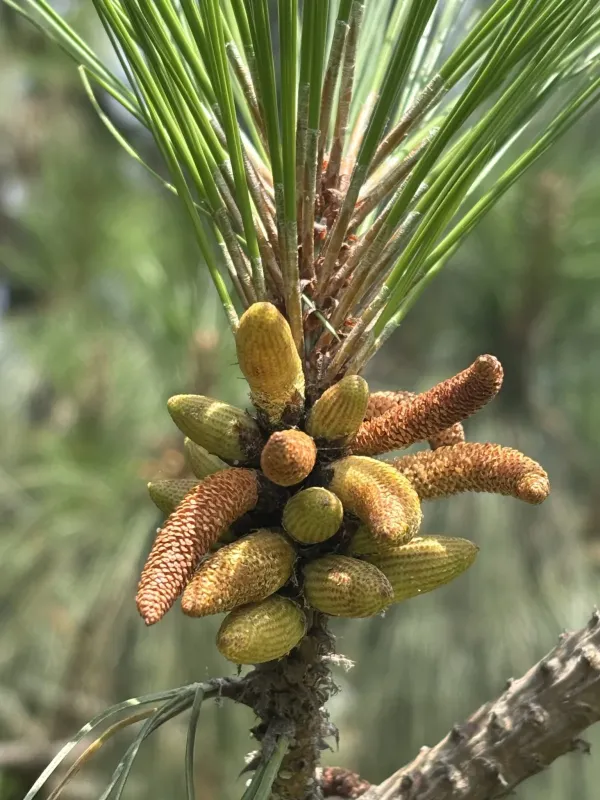
Botanically, it is distinguished by its long, drooping, grass-green needles grouped in fascicles of five. The cones are relatively large, asymmetrical, and light brown, contributing to its ornamental value in addition to its timber quality.
The economic value of this pine is significant in its native range, where its wood is harvested for furniture manufacturing, light construction, and the production of high-grade pulp and plywood.
Main diseases and pests
Pinus pseudostrobus is susceptible to various fungal pathogens, particularly in plantations where density is too high. Needle cast and root rot diseases are among the most common issues that affect the health of the trees.
Insect pests, notably the bark beetle family (Scolytinae), pose a major risk to mature stands. These insects tunnel through the bark, disrupting nutrient transport and often introducing deadly fungal spores into the tree tissue.
In nurseries, seedlings must be protected against aphid and mite infestations. These small pests suck sap from the young needles, causing chlorosis and a significant reduction in the tree's overall vigor.
Management of these threats involves monitoring population density of insects and using pheromone traps. Silvicultural practices like proper thinning and sanitation are essential for long-term health.
The application of integrated pest management strategies, including the use of systemic fungicides and entomopathogenic fungi, remains the primary method for protecting industrial pine plantations.