
Pinus merkusii
Pinus merkusii Jungh. & de Vriese
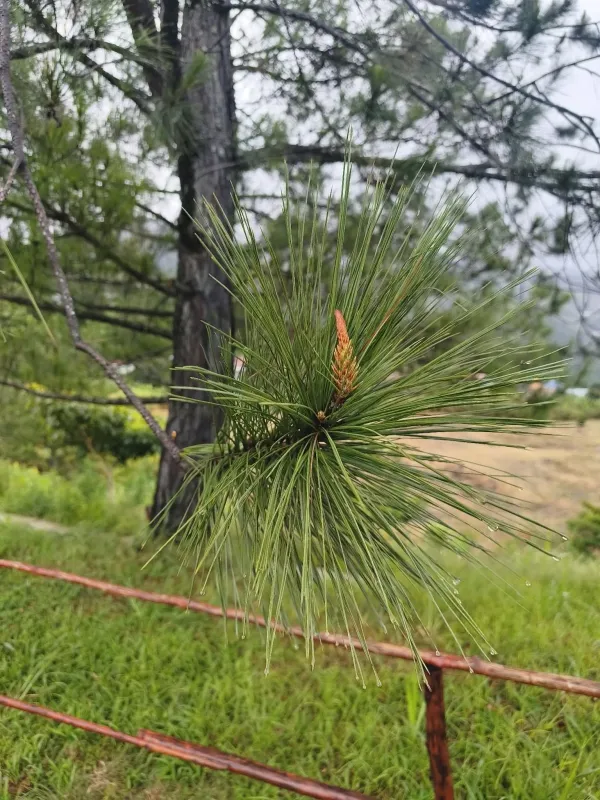
Description
Sowing dates
Sowing Pinus merkusii seeds in nurseries is typically performed at the beginning of the rainy season to ensure optimal moisture levels for germination. The seeds exhibit high germination energy when kept at appropriate temperatures.
In natural habitats, reproduction occurs via seeds, with cones opening upon maturation to release winged seeds. For silvicultural purposes, seeds are often stratified or soaked to enhance and synchronize germination.
Seedlings are outplanted to permanent sites at one to two years of age, once the root system is robust enough to adapt to field conditions. Proper spacing is crucial to prevent competition for sunlight during the initial establishment phase.
Containerized planting techniques are commonly used to minimize root disturbance, which significantly improves the survival rate of young trees during the transition to forest sites.
Soil preparation before planting includes clearing competing vegetation and light tilling, which reduces nutrient competition and creates a favorable environment for rapid root development.
Growing requirements
Pinus merkusii is a tropical species that thrives in the hot, humid climates of Southeast Asia. It is highly adaptable, growing at elevations ranging from sea level up to 2000 meters.
This species is highly intolerant of shade and requires full exposure to direct sunlight for vigorous growth and healthy development of the canopy.
The species displays significant plasticity regarding soil conditions, thriving on poor, sandy, or even rocky substrates. However, maximum growth rates are achieved on deep, well-drained soils.
Ideal temperatures for active growth range from 20 to 30 degrees Celsius. The species exhibits notable drought tolerance, making it a viable candidate for reforestation in regions with distinct dry seasons.
The presence of symbiotic mycorrhizal fungi is essential for nutrient uptake in poor tropical soils, necessitating healthy soil microbiology for successful long-term cultivation.
Yield
The economic value of Pinus merkusii is primarily driven by its quality construction timber, which features moderate density and good mechanical properties. The growth rate is relatively fast for a conifer species.
Besides timber, this species is a significant source of resin and oleoresin, which are harvested commercially in various regions. Resin yields depend on tree maturity and local climatic conditions.
The wood is widely used in pulp production, plywood manufacturing, and carpentry. Straight stems allow for the production of high-quality long timber, which is in high demand for local infrastructure projects.
Rotation ages for intensive forestry typically range from 25 to 40 years, depending on the intended end-use of the timber and the quality of the harvested logs.
Total wood yield per hectare can be significantly enhanced through systematic thinning and regular maintenance, ensuring that individual trees have sufficient resources for optimal increment.
Main diseases and pests
Forest fires represent a primary threat to young plantations, as the species has adapted to periodic low-intensity fires but remains highly vulnerable during its early life stages.
Pests such as bark beetles and various Lepidoptera species can cause severe damage to weakened trees, potentially leading to widespread forest dieback under stressful environmental conditions.
Fungal pathogens causing root rot or needle blight thrive in poorly drained soils or overly dense plantations where air circulation is restricted.
Competition from invasive plant species can hinder the growth rate of young pine cultures, necessitating timely mechanical weeding and site management practices.
In certain areas, excessive resin tapping by humans can physically weaken trees, making them more susceptible to subsequent pathogen attacks and infestations.