
Pince's Pine
Pinus pinceana
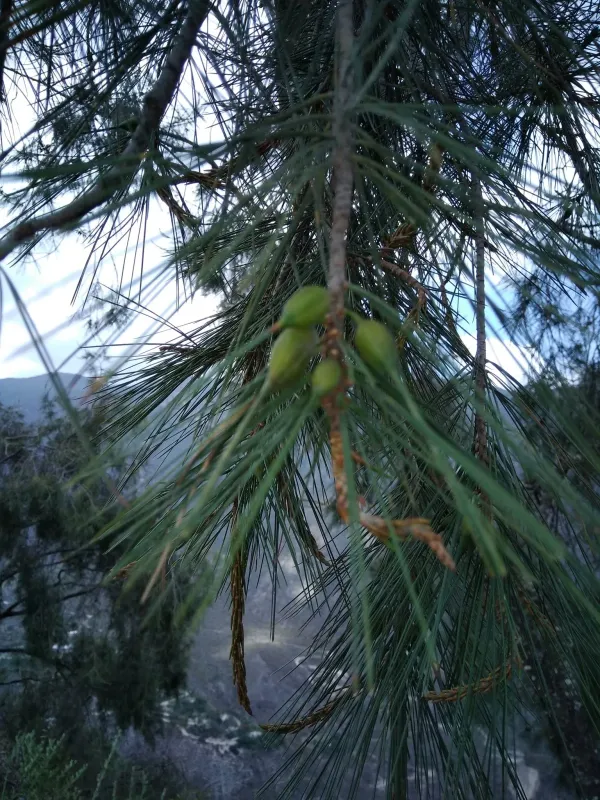
Description
Growing requirements
Pince's Pine (Pinus pinceana) is a distinctive coniferous tree species belonging to the Pinaceae family. It is an endemic species native to the arid and semi-arid regions of central and northern Mexico, typically thriving at elevations ranging from 1000 to 2600 meters.
This species is highly adapted to drought and harsh environmental conditions, often growing in poor, rocky, or calcareous soils. It prefers sunny locations and exhibits a low tolerance for waterlogged soils, making it an excellent candidate for semi-desert reclamation projects.
Botanically, it is classified as a nut-bearing pine, known for its large, edible seeds. The tree typically reaches a height of 10 to 12 meters, displaying an open, spreading crown with long needles bundled in threes, which helps in efficient moisture retention.
Agrotechnical requirements for Pinus pinceana emphasize excellent soil drainage and a climate that mirrors its native, dry environment. Young saplings require careful protection from severe winter frosts during their establishment phase until the root system is well-developed.
Propagation is primarily carried out via seeds, as this species is sensitive to root disturbance and does not tolerate transplantation well. Direct seeding in well-prepared areas is recommended to ensure strong early growth and minimize plant stress.
Yield
The primary economic value of Pince's Pine lies in its large, oil-rich seeds, which have been historically gathered for food. The annual yield of these seeds varies significantly depending on rainfall and local climatic cycles during the maturation period.
In plantation settings, reliable nut production usually begins 10 to 15 years after planting. While the growth rate of this pine is relatively slow, its resilience makes it a sustainable crop for long-term agroforestry systems in challenging environments.
The wood of Pinus pinceana is dense and decay-resistant; however, due to the tree's rarity, its timber harvest is restricted. Current agricultural focus remains heavily on seed harvesting and its role in soil stabilization rather than wood production.
Beyond seed production, the tree serves a critical role in preventing soil erosion in arid mountainous regions. By acting as a windbreak and improving soil structure, it facilitates the establishment of more fragile plant species beneath its canopy.
Advanced agricultural practices involve selecting superior phenotypes for higher nut yields. Integrating this species into agroforestry plots can provide a diversified income stream while contributing to the conservation of this rare Mexican pine species.
Main diseases and pests
The main threats to Pince's Pine populations include overgrazing by livestock, which prevents natural recruitment of young saplings, and ongoing habitat fragmentation. Human intervention remains the primary cause of population decline.
Phytopathological risks include potential fungal infections, particularly rust diseases, if the trees are exposed to high humidity or lack of proper ventilation. Maintaining adequate spacing between trees is crucial for preventing the spread of moisture-related pathogens.
Pests such as bark beetles and various wood-boring weevils can threaten trees already weakened by prolonged drought conditions. Early detection via visual inspection of bark and foliage health is essential for effective pest management.
Wildfires pose a major risk to both natural stands and cultivated plantations in its arid habitat. The implementation of firebreaks and the removal of dry underbrush are necessary management strategies to protect these long-lived trees.
Conservation efforts are vital for the survival of the species, focusing on establishing managed plantations and protected reserves. Supporting local programs that promote sustainable seed gathering and habitat protection is key to preventing its extinction.