
Pond pine
Pinus serotina Michx.
Description
Sowing dates
Pond pine is an evergreen coniferous tree belonging to the Pinaceae family. It is native to the southeastern United States, where it is well-adapted to poorly drained, wet, and often swampy environments.
A distinctive botanical trait of this species is serotiny; its cones remain closed for several years, relying on intense heat, usually from wildfires, to melt the resinous seals and release the seeds for natural regeneration.
The tree typically grows to a height of 15–20 meters and is characterized by needles bundled in threes, reaching 10 to 20 centimeters in length. The trunk is often crooked, which is a classic feature of the species.
Propagation requires specific techniques to mimic natural cone opening. In nursery settings, seeds must be extracted under controlled temperatures, followed by proper stratification to ensure a high germination rate for young seedlings.
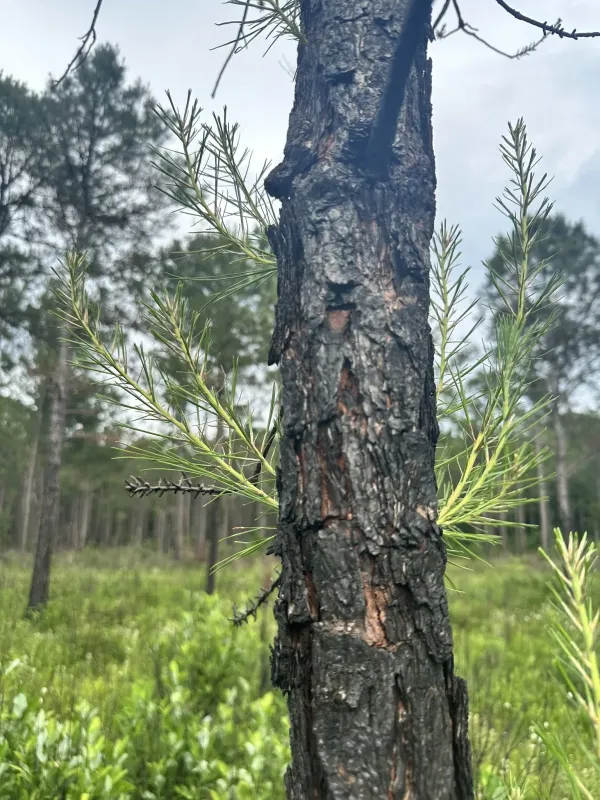
Pond pine exhibits an unusual ability for a pine species to sprout epicormic shoots directly from the trunk, which helps the tree recover quickly after being damaged by mechanical stress or fire.
Growing requirements
The species has very specific moisture requirements, preferring wet, sandy, or organic soils. It thrives in acidic soil conditions that are typically too nutrient-poor or waterlogged for other pine species.
It is a highly intolerant species regarding shade. To achieve optimal growth, trees must be planted in full sun, ensuring that canopy competition from other tall plant species is kept to a minimum.
Climate needs are consistent with a humid subtropical zone. The species relies on a long growing season with high rainfall, as extended droughts can hinder its metabolic processes and overall wood development.
Agrotechnical management involves careful monitoring of water levels. While it tolerates wet feet, extreme stagnation or complete drying of the soil can lead to decreased health and vulnerability to environmental stress.
In silvicultural practice, managing competing vegetation during the seedling stage is essential to ensure that the young trees have sufficient access to light and minerals for early establishment.
Yield
Economically, Pond pine is primarily managed as a source of pulpwood for the paper and cellulose industry, due to its ability to grow in areas that are not suited for more valuable lumber species.
While the timber quality is moderate and often affected by grain curvature and knots, it is utilized for secondary wood products, including utility poles, wood chips, and raw material for wood charcoal production.
The species plays a critical role in the rehabilitation of wetlands, acting as a functional component of the ecosystem that provides cover and stability for otherwise low-productivity soils.
Yield capacity is dependent on planting density and the management of water levels. With proper care, plantations can reach commercial maturity, providing a steady volume of biomass for industrial processing.
Though not commonly used in landscaping, its resilience in swampy regions makes it a preferred choice for large-scale reforestation efforts aimed at restoring native vegetation in coastal plain environments.
Main diseases and pests
Fungal infections, particularly various types of pine rust (Cronartium spp.), represent a significant threat, as they can cause galls on stems and branches, often leading to reduced growth or tree mortality.
Insect pests, such as bark beetles and weevils, pose a major challenge to stand health. They often target trees weakened by environmental factors, boring into the bark and damaging the cambium layer.
The pine sawfly is another common pest whose larvae consume needles, reducing the photosynthetic capacity of the tree and making it more susceptible to further infestations and environmental stress.
Integrated pest management is crucial in plantation settings. Regular sanitation thinning and monitoring of stands help prevent the buildup of pest populations that could lead to widespread damage.
Mechanical damage to the trunk must be avoided during maintenance activities, as any breach in the bark provides an entry point for pathogens that can cause rot and structural decay in the wood.