
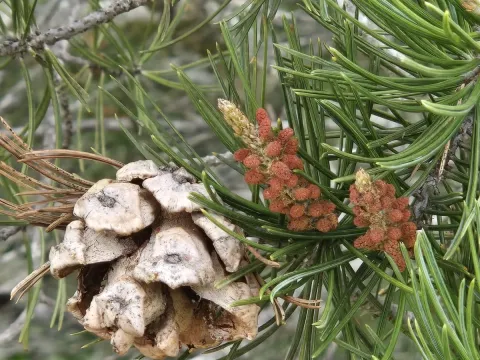
Pinus remota
Pinus remota
Sowing seeds of Pinus remota should be performed in early spring once the risk of frost has passed. Seeds require a period of stratification to improve germination rates, mimicking the natural cycle of the species in its arid native environment.
What the section contains
Pinus remota
Seedlings are best started in well-draining potting mixes within nursery containers. Proper moisture control is essential; the substrate should be kept moist but never waterlogged to avoid root rot during the early stage of development.
When transplanting to a permanent site, space the trees at least 3 to 4 meters apart. This spacing allows for proper crown development and ensures sufficient air circulation, which is vital for the long-term health of the pine.
Utilizing container-grown saplings with established root systems significantly improves survival rates. When planting, ensure that the root ball is level with the soil surface to prevent stem rot and encourage lateral root growth.
Early care involves protecting the young plants from extreme wind and intense midday sun until they are established. Regular monitoring for moisture levels in the root zone is necessary during the first year after planting.
Pinus remota, belonging to the Pinaceae family, is a small to medium-sized pine native to arid regions of Mexico and parts of the United States. It is highly adapted to nutrient-poor, rocky, and calcareous soil types.
The species prefers full sunlight and thrives in conditions that would cause many other trees to struggle. It is remarkably drought-tolerant, making it an excellent candidate for reforestation in dry or degraded landscapes.
Soil drainage is the most critical environmental factor for this species. It cannot tolerate heavy, compacted, or constantly wet soils, which effectively suffocate the root system and leave the tree susceptible to pathogens.
This pine exhibits good cold hardiness within its native range but may struggle in regions characterized by consistently high humidity and prolonged rainfall, which can trigger fungal diseases.
Maintenance fertilization is rarely required for mature trees. If planting in very poor soil, a balanced, slow-release fertilizer designed for conifers can be applied in early spring to support initial growth cycles.
The primary agricultural and forestry use for Pinus remota lies in windbreak development and erosion control on sensitive, arid slopes. Its dense, slow-growing nature makes it an effective barrier against soil degradation.
While not a major source of industrial timber, the wood is durable and can be utilized in local construction and for decorative woodwork. The tree is also valued for its ecological contribution to habitat restoration.
The cones contain edible seeds, which have historically served as a food source for local wildlife and communities. Harvest is limited and manual, often collected from naturally occurring stands rather than commercial plantations.
In landscaping, this species is prized for its attractive, soft foliage and open, graceful habit. It is a preferred choice for xeriscaping and sustainable garden designs that require minimal irrigation.
The tree provides significant environmental services by maintaining soil structure and supporting diverse micro-ecosystems in arid regions where other tree species fail to thrive.
Pinus remota is susceptible to various fungal pathogens, particularly needle cast and rust diseases, which thrive in poorly ventilated or excessively humid conditions. Monitoring for signs of needle discoloration is essential.
Bark beetles and pine sawflies are common insect pests that can attack trees stressed by drought or environmental damage. Early detection is crucial to preventing the infestation from spreading to healthy individuals.
- Conduct regular sanitary pruning to remove dead or diseased branches.
- Ensure appropriate planting density to promote maximum air circulation.
- Apply fungicides preventively if localized disease outbreaks are observed.
- Maintain clear soil around the base of the tree to prevent excessive moisture.
- Implement integrated pest management techniques to handle insect threats.
Maintaining the overall vigor of the trees through proper site selection and avoiding root disturbance is the best defense against pests and diseases. Healthy trees possess natural mechanisms to resist minor infestations.
If chemical intervention becomes necessary, use only systemic products that have been approved for use on conifers. Always follow local environmental guidelines regarding the application of treatments in forested or public areas.