
Pinus culminicola
Pinus culminicola
Description
Growing requirements
Pinus culminicola, commonly known as the Potosi pinyon, is a rare shrubby conifer species within the Pinaceae family. Native to the high altitudes of northeastern Mexico, this species is adapted to extreme alpine environments.
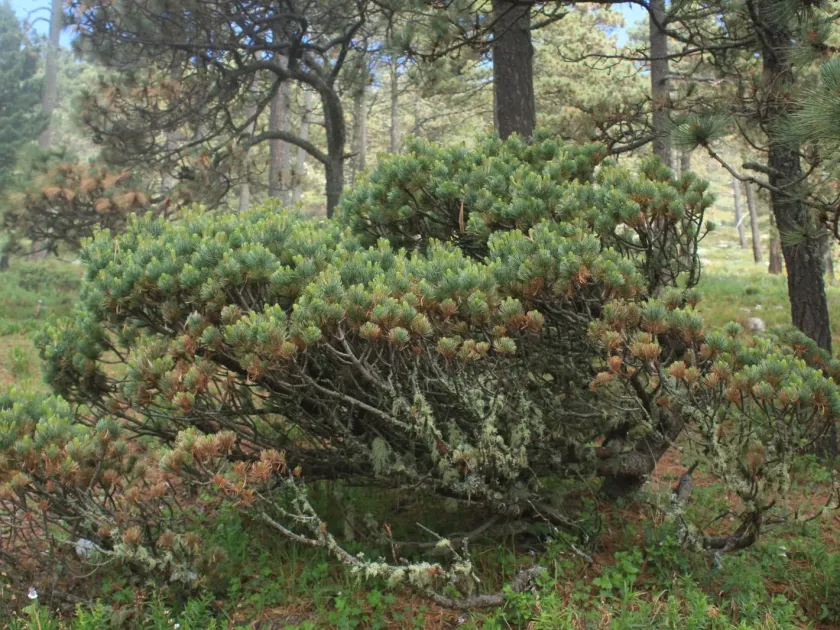
Botanically, it is characterized by its prostrate or stunted growth habit, which allows it to withstand severe wind and low temperatures. Its needles are typically found in bundles and provide a dense, attractive foliage texture.
To cultivate this species effectively, one must replicate its natural rocky, well-draining habitat. The plant requires a substrate that allows for rapid water drainage, as standing water at the roots is detrimental to its long-term survival.
The climate requirements include a preference for high light exposure and cool to moderate temperatures. It is highly resistant to drought once established, making it a sustainable choice for xeriscaping in suitable hardiness zones.
Agronomic maintenance should focus on light fertilization and avoiding excessive nitrogen, which can lead to unnatural, soft growth. Minimal pruning is usually required, mainly for sanitary purposes or maintaining the desired shape.
Main diseases and pests
The primary threats to Pinus culminicola in cultivation involve root-related pathogens. Fungal infections thrive in waterlogged conditions, which necessitates the use of porous, sandy, or stony soil mixtures.
Common pests include spider mites and scale insects, which can affect needle health if the plant is under environmental stress. Preventive measures include ensuring proper air circulation around the canopy.
Rust diseases can also affect the needles, particularly in humid environments. Regular monitoring and the application of appropriate copper-based fungicides can help manage potential outbreaks.
Weed competition is a significant concern during the juvenile stage of the plant. Maintaining a clean area around the base via mulching is highly recommended to promote healthy establishment.
Winter desiccation can occur in exposed locations, so it is advisable to protect young specimens from harsh, drying winter winds during their first few years in a new environment.