
Northern Japanese Hemlock
Tsuga diversifolia
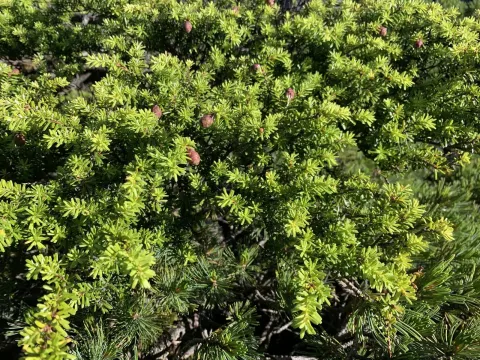
The Northern Japanese Hemlock (Tsuga diversifolia) is a slow-growing evergreen conifer belonging to the Pinaceae family, native to the mountainous regions of Japan. It is highly valued for its elegant, dense pyramidal habit and distinctively dark, lustrous foliage.
What the section contains
Northern Japanese Hemlock
For successful cultivation, this species requires deep, moist, well-drained, and acidic soils. It thrives in humid environments and struggles in heavy, waterlogged ground, making high-quality drainage a critical component of its site preparation.
Climatically, it prefers cool and moist atmospheric conditions. It is remarkably shade-tolerant, which makes it an excellent choice for woodland gardens or shaded areas where other conifers might struggle. Exposure to intense afternoon sun should be avoided to prevent foliar scorching.
Its botanical structure includes small, flattened needles that are dark green above and possess two distinctive white stomatal bands on the underside, providing an attractive contrast. The branches are often drooping or spreading, contributing to its graceful appearance.
Agrotechnical maintenance focuses on maintaining root zone moisture. Using an organic mulch layer—such as shredded pine bark—is essential to prevent evaporation, suppress weeds, and keep the roots cool during the heat of the summer months.
The primary pest concerns for Tsuga diversifolia include the hemlock woolly adelgid and scale insects, which can cause significant damage to the plant's vigor. Early detection through regular monitoring is crucial for successful management of these pests using systemic insecticides.
Root rot, particularly Phytophthora, remains the most significant disease threat, usually triggered by poor drainage and excessive soil moisture. Promoting healthy drainage and avoiding over-irrigation are the best strategies to maintain the health and longevity of these trees.