
Pinus maximinoi
Pinus maximinoi H. E. Moore
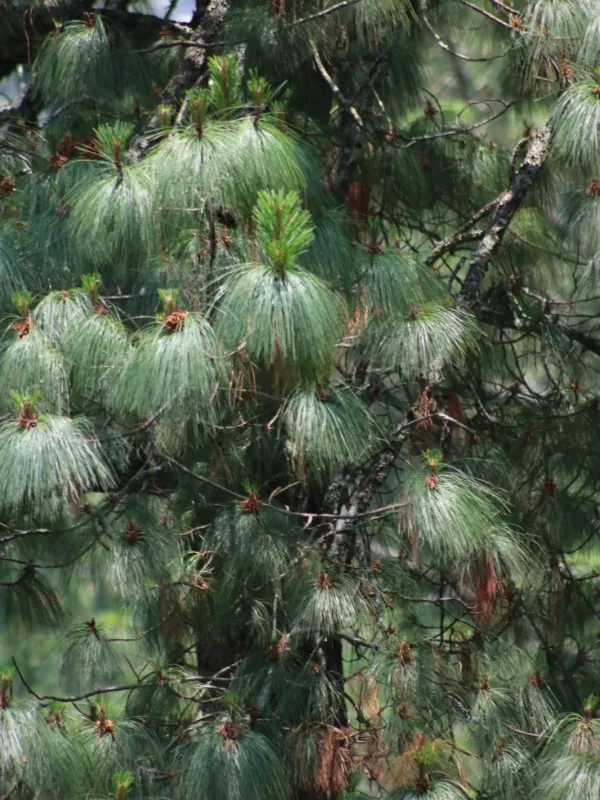
Description
Sowing dates
The sowing of Pinus maximinoi seeds is typically conducted in specialized forest nurseries during late winter or early spring. The germination substrate must be well-drained, slightly acidic, and sandy to ensure sufficient aeration for the delicate developing roots.
Seeds often require a stratification period of 30 to 60 days under cool, moist conditions to overcome dormancy. This process significantly improves the uniformity of seedling emergence in a nursery setting.
The optimal sowing depth is between 0.5 and 1 centimeter. After germination, maintaining consistent soil moisture is crucial, but excessive saturation should be avoided to prevent damping-off disease caused by soil-borne pathogens.
Seedlings are generally kept in nursery containers for one to two years. This phase allows the root system to become robust enough to survive the transition to the field and compete with local vegetation.
When transplanting, it is essential to protect the root ball from drying out. Proper spacing in the field ensures that each tree receives adequate airflow and prevents the early onset of overcrowding-related diseases.
Growing requirements
Pinus maximinoi is a member of the Pinaceae family, native to the mountainous regions of Central America. It thrives in climates characterized by moderate, consistent rainfall and avoids the extremes of temperature found in boreal or arid zones.
The species prefers deep, fertile, and permeable volcanic or alluvial soils. Proper soil structure is vital, as the tree requires deep rooting to support its fast-growing stem and to maintain stability against high winds.
Sunlight is a critical growth factor for this pine. Being a highly heliophilic species, it requires full exposure to solar radiation. Excessive shade will inevitably result in spindly stems and lower wood density, reducing the economic value of the timber.
Temperature management is generally not a concern in its native or adapted range, provided there are no severe late-season frosts that could damage new, tender shoots during the spring growth flush.
Regular monitoring of mineral nutrients is recommended. Specifically, maintaining a balanced supply of phosphorus and potassium helps the trees build cellular structure and develop natural resilience to environmental stresses.
Yield
The yield of Pinus maximinoi is primarily measured by the volume of high-quality timber produced over a rotation period. This species is known for its rapid growth rate, which is a major advantage in commercial forestry plantations.
The wood is highly valued for its versatility, finding extensive use in general construction, joinery, and the production of paper pulp. The straightness of its trunk often results in high-recovery rates during milling.
Strategic thinning is an essential part of management. By selectively harvesting intermediate trees, foresters can allocate more resources—light, water, and nutrients—to the healthiest specimens, thereby increasing the final diameter of the logs.
Depending on site productivity, harvest cycles typically range from 25 to 40 years. Modern intensive silviculture techniques can often bring these trees to maturity more quickly while maintaining wood quality standards.
The long-term yield is also dependent on site protection, including erosion control and the maintenance of soil organic matter, which ensures that the land remains productive for successive planting rotations.
Main diseases and pests
Young seedlings are particularly vulnerable to damping-off caused by fungi such as Fusarium. This risk can be mitigated by ensuring excellent nursery hygiene, adequate ventilation, and precise irrigation management.
Insect pests, including various species of aphids and pine sawflies, can cause significant needle loss. Heavy infestations weaken the tree, making it susceptible to secondary infections or physiological decline.
Bark beetles represent a major threat to mature stands, especially during periods of drought or in forests that have not been adequately thinned. Prompt removal of infested or dead trees is the most effective preventative measure.
Pathogen spread is often exacerbated by high stand density and poor airflow. Managing the microclimate within the forest canopy through regular pruning and thinning reduces the humidity levels that favor fungal growth.
Integrated Pest Management (IPM) protocols, focusing on biological controls and the use of resistant stock, are the most sustainable ways to ensure the longevity and health of Pinus maximinoi plantations.