
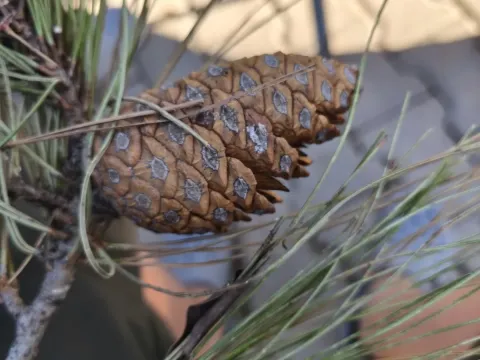
Eldar pine
Pinus brutia Ten. var. eldarica (Medw.) Silba
The propagation of Eldar pine is typically achieved through seeds, which require stratification to break dormancy. Sowing occurs in early spring into well-draining, nutrient-poor soil mixes common in nursery environments.
What the section contains
Eldar pine
Seeds are sown at a shallow depth of 1-2 cm. Maintaining consistent but moderate moisture levels is crucial, as the seedlings are highly susceptible to "damping-off" if the soil remains excessively wet for long periods.
Seedlings are generally kept in nursery conditions for one to two years to develop a robust root system before being outplanted. Gradual hardening-off is necessary to acclimatize young trees to environmental stressors.
Spacing depends on the intended use; for afforestation and erosion control, tighter spacing is used to promote straight stem growth, while landscape applications require more room to allow for canopy development.
The species exhibits rapid initial growth rates compared to other pines, which makes it an excellent candidate for quickly establishing windbreaks or forest cover in arid climates.
The Eldar pine belongs to the Pinaceae family and is recognized for its extraordinary hardiness. It is specifically adapted to arid and semi-arid regions, thriving in harsh environments where other species fail.
This tree is exceptionally undemanding regarding soil quality. It grows successfully in sandy, rocky, and alkaline soils, showing remarkable tolerance to saline conditions that would typically inhibit tree development.
Sunlight is the primary requirement for the healthy development of this species. As an obligate heliophyte, it requires full, direct sun to maintain its conical form and prevent the premature shedding of lower branches.
The species is highly valued for its drought resistance. Once established, it can withstand prolonged periods of high heat and low precipitation without requiring supplemental irrigation, making it a sustainable choice for water-scarce areas.
While tolerant of some cold, it is best suited for climates with mild winters. In areas prone to extreme freezing, care must be taken to select sheltered sites to prevent winter burn on younger specimens.
Pine sawflies are among the most significant pests affecting this species. Larvae feed on the needles, and large infestations can defoliate entire trees if left unchecked during the growing season.
Bark beetles represent a major threat, particularly during cycles of extreme drought when tree vitality is compromised. These pests target the phloem, potentially leading to the rapid decline and death of mature individuals.
Fungal pathogens such as needle cast can occur when humidity levels remain high or airflow is restricted within dense clusters of trees, necessitating proper spacing and pruning to facilitate ventilation.
Root rot is often associated with improper soil drainage. Ensuring that the planting site has adequate permeability is the most effective way to prevent these soil-borne fungal infections.
Integrated pest management strategies, combining regular monitoring with targeted chemical or biological applications, are recommended to preserve the integrity of Eldar pine stands.