
Coulter pine
Pinus coulteri D. Don
Description
Sowing dates
Propagation of Coulter pine is primarily achieved through seeds, which require a cold stratification period of 30 to 60 days to break dormancy and ensure high germination rates. Seeds should be sown in a well-draining, sterile sandy medium.
In nursery settings, seeds are planted at a depth of 1.5–2 cm. Maintaining a consistent moisture level is crucial; however, overwatering must be strictly avoided to prevent fungal issues such as damping-off in young seedlings.
Germination typically occurs within a few weeks after the stratification phase. Once seedlings develop their first true needles, they should be gradually acclimated to direct sunlight to ensure sturdy growth and proper development of the root system.
Transplanting into the field is best performed during the dormant season, specifically early spring. Care must be taken to maintain the root ball's integrity, as Coulter pine is sensitive to root disturbance which can significantly stunt its growth.
Due to the species' potential for a large crown diameter, spacing between trees should be generous, ideally at least 5 to 6 meters, to allow for optimal airflow and prevent competition for resources among mature specimens.
Growing requirements
The Coulter pine (Pinus coulteri) belongs to the Pinaceae family and is native to the coastal mountains of California and northern Mexico. It is highly adapted to nutrient-poor, rocky, and gravelly soils common in its natural habitat.
This species is exceptionally drought-tolerant once established, thriving in Mediterranean-type climates with distinct dry summers. It demands full sun exposure and performs poorly in shaded areas, which can lead to crown thinning and susceptibility to pests.
While the tree can tolerate light frosts, it is not suited for extremely cold climates with severe winters. It prefers well-aerated, dry soil profiles; therefore, it is vital to avoid heavy clay or waterlogged soils that inhibit root oxygenation.
Fertilization is rarely necessary in healthy, mature stands. However, in ornamental or forest nursery settings, a balanced NPK fertilizer applied sparingly during the early growth years can promote faster establishment and tree vigor.
Providing a proper drainage layer in planting pits is essential for survival, especially in areas where soil drainage may be naturally poor, ensuring the long-term health of the root system against decay pathogens.
Yield
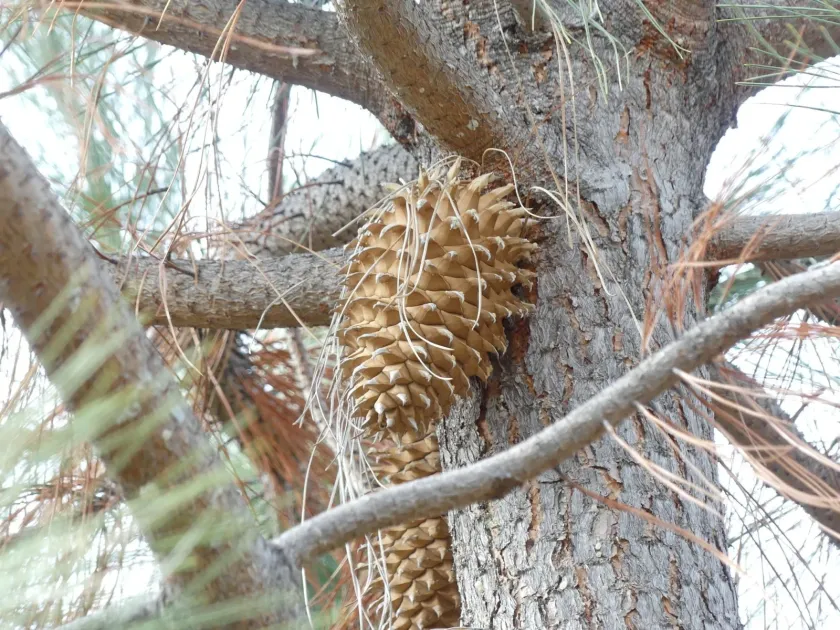
The Coulter pine is primarily valued for its massive cones, which are among the heaviest of any pine species. Its use is largely ornamental in arboretums and large landscape designs rather than industrial timber production.
While the wood can be used for structural purposes, its high resin content and knotty nature make it less desirable for high-quality lumber. Its primary economic contribution is through its aesthetic appeal and scientific interest.
In forest management, the species provides excellent erosion control on slopes and serves as a habitat for local wildlife. The large seeds produced by the cones are an important food source for various birds and small mammals.
Productivity in terms of cone harvest is a niche market for decorative arts and floral industry supplies. Large, intact cones are highly sought after by designers and hobbyists for their unique, massive appearance.
Mature trees grow at a moderate rate, eventually reaching impressive sizes. Sustainable management involves selective thinning to promote the growth of the healthiest specimens and to maintain forest health over time.
Main diseases and pests
Fungal pathogens such as needle rust and various types of stem decay represent the primary biological threats. Improving stand airflow through proper spacing is the most effective cultural method to mitigate these risks.
Bark beetles are a significant concern, particularly in stressed or over-mature trees. Keeping the stand healthy through consistent monitoring and removing infested branches is crucial for preventing widespread outbreaks.
Root rot pathogens, often facilitated by poor soil drainage, can kill trees rapidly. Prevention relies on selecting planting sites that avoid moisture accumulation and strictly following proper irrigation practices.
Occasional infestations of pine aphids can damage new growth, leading to unsightly yellowing of needles. If necessary, systemic insecticides may be applied to young, valuable trees during the active growing season.
- Regular inspection of bark for entry holes or pitch tubes.
- Sanitary pruning of dead or diseased branches to reduce pathogen load.
- Application of specialized fungicides in nursery conditions to prevent seedling diseases.