
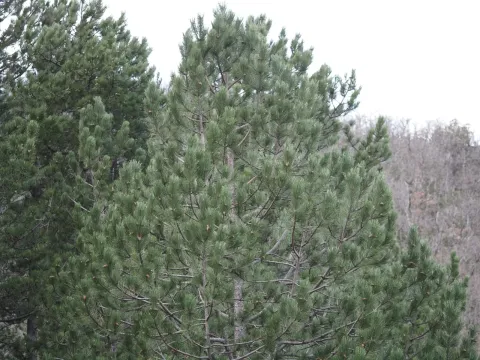
Crimean pine
Pinus nigra J. F. Arnold subsp. pallasiana (Lamb.) Holmboe
Sowing of Crimean pine seeds is typically performed in the spring when soil temperatures reach 10 degrees Celsius. In commercial nurseries, seeds undergo cold stratification to improve germination rates, which are crucial for achieving uniform plant stands.
What the section contains
Crimean pine
Late autumn sowing is also a viable option in milder climates. By sowing before the soil freezes, the seeds receive natural stratification, leading to more vigorous and naturally timed germination when spring conditions arrive.
The ideal growing medium is a loose, well-draining sandy or loamy soil. Excessive moisture must be avoided, as the species is highly sensitive to waterlogged conditions that trigger root rot and damping-off disease in young seedlings.
Spacing in nursery beds is usually maintained at 15–20 centimeters between rows to ensure adequate airflow and light penetration. Proper ventilation is essential for preventing the build-up of humidity that favors fungal pathogens in the seedling stage.
Early care involves vigilant weed management and moisture control. While the species is drought-tolerant as an adult, the first two years of development require consistent watering to establish the root system sufficiently for future resistance.
The Crimean pine, a subspecies of Pinus nigra (Pinaceae family), is a light-demanding tree that thrives in open environments. It requires full sunlight to maintain a dense, healthy crown and to prevent the lower branches from dying off prematurely.
One of the key agricultural advantages of this species is its exceptional drought tolerance. The deep taproot system allows it to reach water reserves in rocky, calcareous, or sandy soils where other coniferous species struggle to survive.
Climatically, it is robust, handling cold winters and hot, arid summers with ease. It is particularly well-adapted to Mediterranean-style climates, making it a preferred choice for reforestation projects on degraded or dry mountain slopes.
Soil requirements are relatively modest, as the tree prefers slightly alkaline to neutral pH levels. It performs best on soils containing limestone, which helps support the development of strong, thick needles and overall timber quality.
Regarding silvicultural management, the trees should be planted with enough space to avoid overcrowding. Pruning is rarely needed, but selective thinning in mature stands is necessary to reduce competition for nutrients and maintain the vigor of the remaining trees.
Fungal diseases like Dothistroma needle blight and Sphaeropsis shoot blight are common threats to the Crimean pine. These pathogens thrive in high-humidity conditions, emphasizing the need for proper site selection and planting density to ensure good aeration.
Insect pests, specifically pine beetles (like Ips spp.), pose a significant risk to stressed trees. Drought-weakened stands are particularly vulnerable, necessitating aggressive monitoring and the prompt removal of infested wood to protect the remaining forest health.
The European pine sawfly is another critical pest, as its larvae feed in groups and can defoliate large portions of a tree within a short window. Early detection via pheromone traps is the most effective management strategy for this pest.
Stem cankers and various wood-rotting fungi may enter the tree through wounds caused by wind damage or improper harvesting techniques. Maintaining tree integrity and avoiding mechanical damage are vital for long-term health and wood production value.
- Needle blight (Dothistroma)
- Shoot blight (Sphaeropsis)
- Pine bark beetles
- European pine sawfly
- Stem rot fungi