
Corsican Pine
Pinus nigra J. F. Arnold subsp. laricio Maire
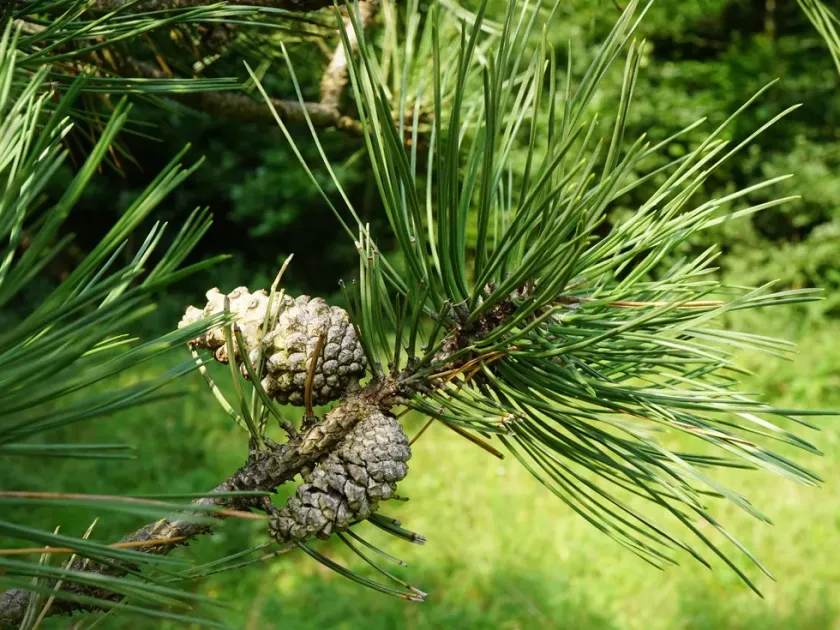
Description
Sowing dates
Sowing of Corsican pine seeds is ideally performed in the spring season once the frost risk has passed and the soil has sufficiently warmed up. Proper seed stratification improves germination rates significantly.
Seeds are sown in nursery beds or containers with well-draining, nutrient-rich soil substrates at a shallow depth of about 1.5 to 2 centimeters to ensure successful emergence.
Young seedlings require careful attention to irrigation to prevent root rot while maintaining consistent moisture levels during their critical initial growth stages.
Transplanting containerized saplings is the preferred method for reforestation projects as it offers a higher success rate compared to bare-root planting, ensuring rapid root establishment.
Spacing between saplings should be calculated based on the project goal, typically ranging from 2 to 3 meters to allow sufficient light penetration and airflow for healthy canopy development.
Growing requirements
Corsican pine is a subspecies of the Black Pine family and is known for its preference for sunny, open habitats with good exposure to direct solar radiation for optimal development.
The tree thrives in well-drained soils, showing a remarkable ability to adapt to varying soil types including chalky, sandy, and stony substrates, making it versatile for different terrains.
It exhibits strong tolerance to moderate drought conditions due to its deep taproot system, which allows the tree to access moisture even in challenging environmental conditions.
Climate adaptability is a hallmark of this species, as it handles Mediterranean coastal influences well, being resistant to salty winds and moderate temperature variations throughout the year.
Soil aeration is paramount for the health of Corsican pine; therefore, avoiding waterlogged areas is essential to prevent root asphyxiation and the development of pathogenic fungal infections.
Yield
The primary economic value of Corsican pine lies in its high-quality timber, which is prized for its straight grain, strength, and durability in various industrial applications.
The tree demonstrates a consistent and relatively fast growth rate in the early and middle stages, contributing significantly to the biomass yield of forest plantations over time.
Industrially, the wood is utilized extensively in construction, the manufacture of fine furniture, and for structural support beams, owing to its resinous properties and mechanical stability.
Sustainable forest management practices, including selective thinning, enhance the overall yield by promoting the growth of the healthiest trees and improving the final timber quality.
Beyond timber production, the species is frequently employed in erosion control and large-scale landscape stabilization, providing ecological services alongside its commercial utility.
Main diseases and pests
Major phytosanitary threats to Corsican pine include fungal infections such as Dothistroma needle blight and various types of pine rust, which can severely impact needle density.
Insects like the pine shoot beetle and various bark beetles pose significant risks, especially in stressed or neglected forest stands where trees are already vulnerable.
Effective management includes regular sanitation cuts to remove infested wood and prevent the spread of diseases, along with the monitoring of pest populations throughout the growing season.
Protecting young plantations from browsing wildlife is crucial for survival, as damage to the leading shoot can lead to deformed growth and reduced long-term timber value.
- Implementation of regular forest health surveys.
- Strategic application of fungicide treatments in nurseries.
- Promotion of natural biodiversity to balance pest populations.
Harvesting
Timber harvesting for Corsican pine generally occurs at rotation ages ranging from 60 to 80 years, depending on the specific site quality and the end-use objectives of the wood.
Modern logging operations utilize mechanized harvesters to ensure efficiency, safety, and precision, significantly reducing waste and minimizing impact on the surrounding forest environment.
Post-harvest management is a critical step that involves site clearing and soil preparation to facilitate natural regeneration or the planting of the next generation of trees.
Harvested logs are categorized into specific grades based on size and defect presence before being transported to sawmills for processing into construction or furniture-grade lumber.
Maintaining a cycle of harvest and replanting is essential for sustainable forest resource management, ensuring that the ecological and economic benefits of the species continue into the future.