
Japanese red pine
Pinus densiflora Siebold & Zucc.
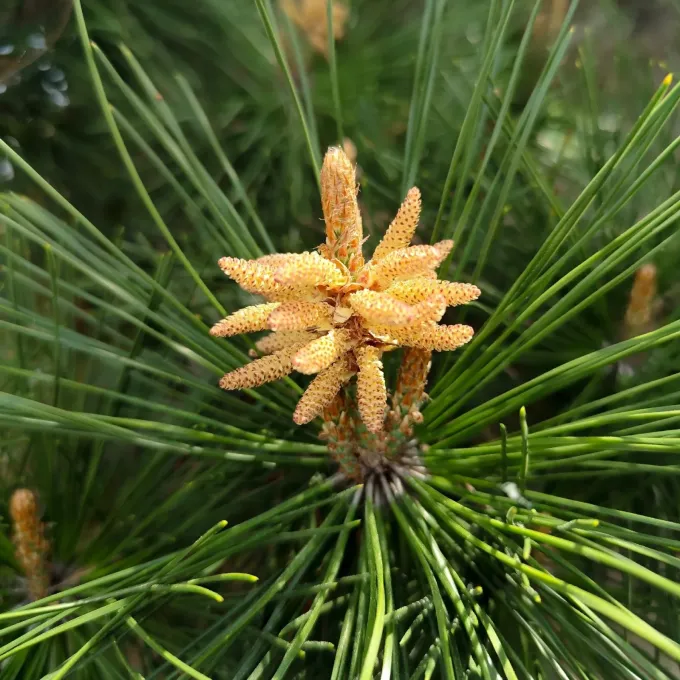
Description
Growing requirements
Japanese red pine (Pinus densiflora) is a prominent member of the Pinaceae family, widely recognized for its beautiful reddish bark and sculptural growth habit. It is a long-lived evergreen conifer.
Native to Japan, Korea, and northeastern China, this species thrives in temperate climates. It is highly photophilous and requires full sun exposure to maintain its dense foliage and healthy development.
The tree prefers well-drained, acidic to neutral soils. It is remarkably resilient and can adapt to poor soil conditions, provided that air circulation is adequate around the root system.
Cultivation practices involve regular monitoring of moisture levels during the first two years after planting. Adding organic mulch helps retain moisture and mimics the natural forest floor environment.
Economic uses include landscape design, such as bonsai art, and large-scale forestry. The timber is valued for its durability and is often used in construction and woodworking projects.
Main diseases and pests
The main pathological threats include needle cast diseases (Lophodermium) and pine wilt disease, which is often spread by wood-boring beetles. Sanitation is crucial to limit the impact of these diseases.
Insects like the pine sawfly and various bark beetles are significant pests that target the needles and cambium layer. Regular inspections during the growing season are necessary to prevent infestations.
Management strategies incorporate the use of targeted systemic fungicides and insecticides. Integrated pest management (IPM) practices are highly recommended for large plantations.
Cultural care, including the removal of dead wood and debris, significantly reduces the likelihood of colonization by pests. Maintaining healthy tree vigor is the primary defense against attacks.
Proactive management of the plantation density ensures adequate airflow, preventing the development of favorable conditions for fungal spore germination. Proper care leads to stronger, more resistant trees.