
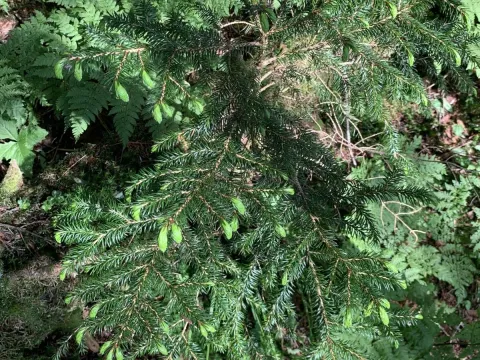
Torano spruce
Picea torano
Torano spruce (Picea torano) belongs to the Pinaceae family. It is a coniferous evergreen tree native to the mountainous regions of Japan, specifically occurring on Honshu, Shikoku, and Kyushu islands.
What the section contains
Torano spruce
The species requires moderately moist, well-drained soils with an acidic or neutral reaction to thrive in forest and nursery environments.
It prefers climates characterized by cool summers and moderate winters, mimicking the conditions of the high-altitude Japanese forest zones where the species evolved.
Agricultural success with this species depends on selecting sites that prevent waterlogging, as root health is critical for long-term growth and survival.
Adequate sunlight exposure is beneficial for the density of the crown, although young saplings may benefit from partial shade during their early development stages.
Like many conifers, Picea torano is susceptible to fungal diseases that affect the needles and shoots, especially when air circulation is restricted.
Insect pests, including various types of aphids and sawflies, may damage the foliage, requiring active monitoring and integrated pest management strategies.
Root rots caused by soil-borne pathogens are a significant threat if drainage systems fail or if planting density is too high for the site conditions.
Stem-boring insects tend to target stressed or damaged trees, making the maintenance of optimal tree health the best defense against major infestations.
Standard silvicultural practices such as thinning and pruning are essential to manage the spread of pests and maintain a productive and healthy stand.