
Siberian spruce
Picea obovata
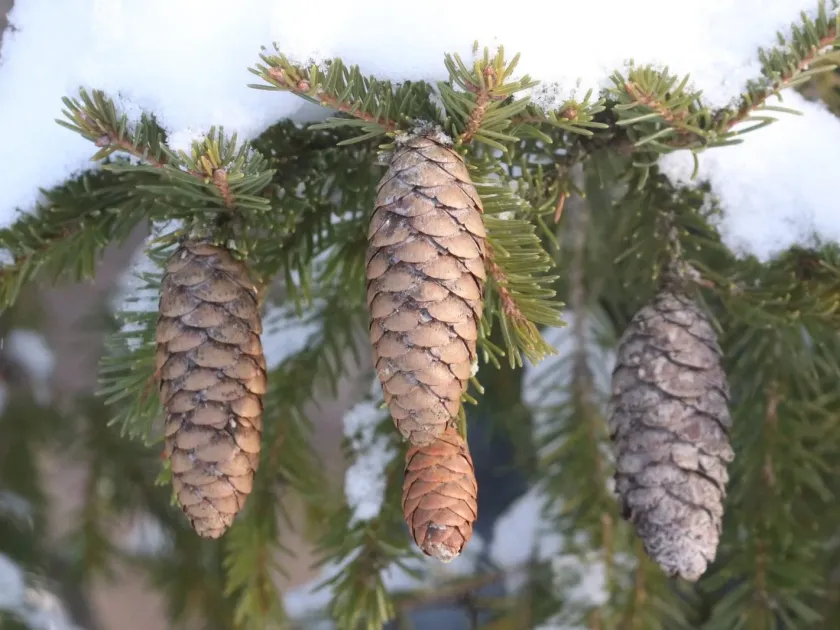
Description
Sowing dates
Siberian spruce is primarily propagated by seeds collected from ripe cones. Seed pretreatment, including stratification at low temperatures, is essential for uniform germination.
Sowing in forest nurseries typically occurs in spring once the threat of late frosts has passed. Seeds are placed in prepared beds and covered with a thin layer of soil and mulch.
Maintaining constant moisture during the germination phase is critical. Seedlings are usually kept in nurseries for several years until they reach a suitable size for outplanting.
Young trees are sensitive to intense sunlight during their first stages of development, necessitating the use of shading cloths in nursery environments.
Transplanting into the permanent site is most successful when performed while the plant is dormant, typically during early spring or autumn seasons.
Growing requirements
Belonging to the Pinaceae family, the Siberian spruce is a shade-tolerant, evergreen conifer. It is well-adapted to cold northern climates and can survive extreme temperatures.
The species prefers deep, moist, well-drained loamy soils. It avoids poorly drained or waterlogged environments, which can lead to root system decay.
High air humidity is beneficial for the development of the Siberian spruce. It struggles in regions with hot, dry summers and high levels of urban air pollution.
Because its root system is shallow, the tree is susceptible to windthrow. Planting in sheltered locations or areas with stable wind conditions is recommended for plantations.
The tree demonstrates slow to moderate growth rates, forming dense and symmetric crowns when provided with adequate spacing and nutrient-rich soil conditions.
Main diseases and pests
The spruce bark beetle is a major threat, particularly to mature stands. Infestations can spread rapidly, leading to significant timber losses in commercial forests.
Needle cast diseases, such as those caused by Lophodermium species, can defoliate young trees, significantly reducing their vigor and overall annual growth rate.
Spider mites are a common nursery pest, especially in dry weather. They feed on needles, causing discoloration and eventual needle drop if left unmanaged.
Root rot pathogens represent a long-term threat to the health of the tree, often compromising the stability and longevity of older stands in plantations.
Integrated pest management strategies, including monitoring and the selective removal of infected trees, are the most effective ways to maintain plantation health.