
Veitch's spruce
Picea neoveitchii
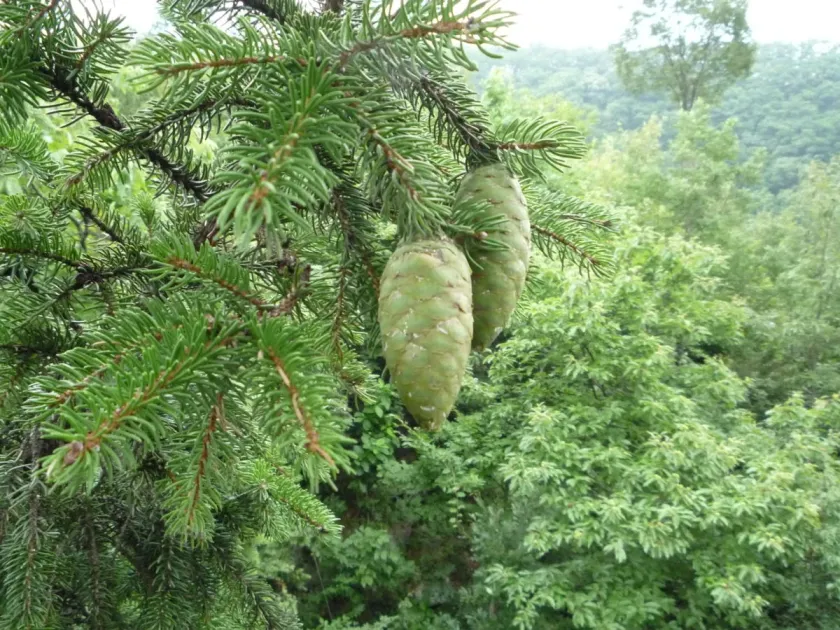
Description
Growing requirements
Veitch's spruce (Picea neoveitchii) is a distinctive member of the Pinaceae family, native to the high mountain forests of Central China. This species is highly regarded for its botanical rarity and its elegant, conical structure that matures into a towering, noble specimen over time.
The culture thrives in cool, temperate climates and requires well-drained, nutrient-rich soils to reach its full potential. It is particularly sensitive to soil compaction and waterlogging, making proper site selection and the installation of a gravel drainage layer essential for healthy root development.
In terms of climate, this tree prefers high air humidity and dislikes extreme heat or arid conditions. In cultivation, young trees often require partial shade to protect them from intense direct sunlight, which can cause scorching of the needles during the first few years of establishment.
Agronomic practices for Picea neoveitchii focus on long-term maintenance rather than intensive production. Because of its slow growth rate, pruning is generally kept to a minimum, reserved strictly for removing dead or diseased wood to maintain the tree's natural and symmetrical form.
Economically, the species is primarily managed for conservation and ornamental use within botanical collections. Its scarcity makes it a protected species in many regions, emphasizing the importance of ethical propagation and careful handling in specialized nurseries and arboretums.
Main diseases and pests
The health of Picea neoveitchii is frequently challenged by fungal pathogens that thrive in poorly ventilated environments. Needle cast and root rot are the primary concerns, often triggered by excessive rainfall and stagnant water near the base of the tree during the warmer months.
Pests such as spruce aphids and spider mites are common threats that can significantly impair the vitality of the spruce. These pests feed on the sap, causing needle yellowing and premature shedding, which weakens the tree and leaves it susceptible to secondary environmental stressors.
Integrated Pest Management (IPM) is crucial for this species. This involves regular scouting for early signs of infestation and applying targeted insecticides or horticultural oils only when necessary to prevent ecological disruption and harm to the tree's delicate foliage.
Maintenance of soil health through balanced fertilization and appropriate mulch application helps the tree maintain natural defenses. A robust spruce is far more capable of withstanding minor pest pressure without the need for extensive chemical interventions.
- Regular inspection of bark and foliage for signs of pests.
- Application of copper-based fungicides during the dormant season.
- Maintaining proper spacing to ensure adequate air circulation around the crown.