
Sikkim spruce
Picea spinulosa
Description
Growing requirements
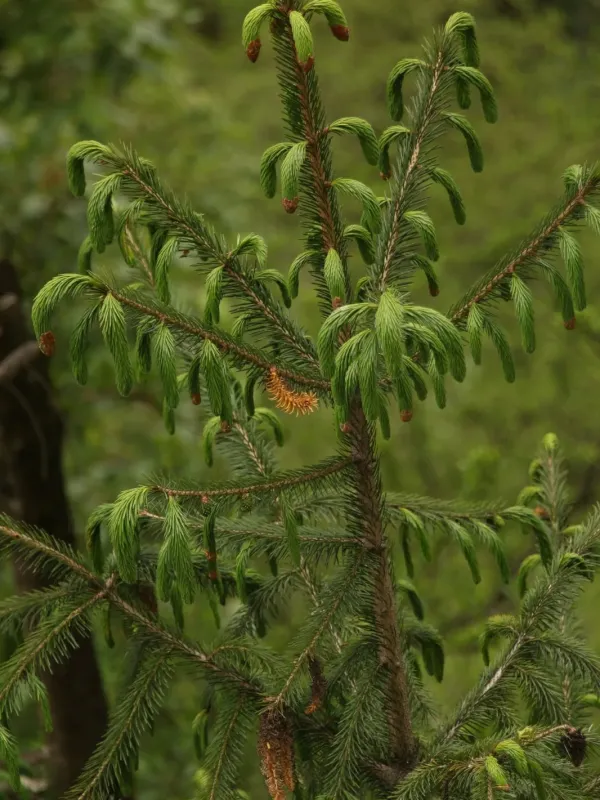
The Sikkim spruce (Picea spinulosa) is a majestic evergreen conifer belonging to the Pinaceae family. It is renowned for its graceful, pendulous branches and thin, needle-like foliage that creates an elegant silhouette in any landscape setting.
Native to the eastern Himalayas, including regions of Sikkim, Bhutan, and Nepal, this species thrives in high-altitude environments. It generally grows at elevations ranging from 2,400 to 3,600 meters, where it benefits from high atmospheric humidity and cool temperatures.
Successful cultivation requires deep, well-draining, and nutrient-rich soils. While it can adapt to various soil types, maintaining a slightly acidic pH is essential for optimal nutrient uptake and long-term health of the root system.
The tree prefers locations with partial shade during its juvenile stages but requires more light as it matures. It is highly sensitive to drought and dry winds, making it crucial to plant it in sheltered areas where moisture levels in the air remain consistent.
In practice, Picea spinulosa is predominantly used as a specimen tree in large botanical gardens or expansive private estates. Its unique morphology distinguishes it from more common spruce species, making it a prized choice for collectors and landscape architects.
Main diseases and pests
The most significant threats to the Sikkim spruce include spider mites, which can cause severe needle drop during prolonged dry spells. Implementing regular overhead misting can help prevent mite infestations and keep the foliage vibrant.
Root rot, often caused by Phytophthora species, presents a major risk if the soil lacks sufficient drainage. Preventing waterlogged conditions is the primary strategy to maintain a healthy tree and protect it from soil-borne pathogens and fungal infections.