
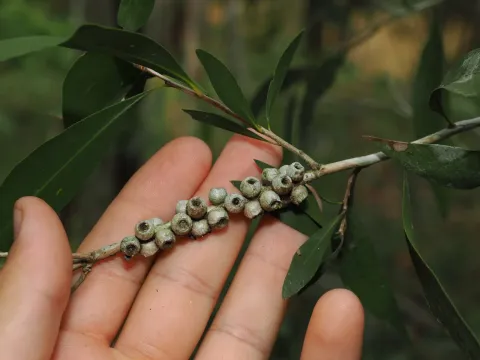
White bottlebrush
Callistemon salignus (Sm.) Sweet
Callistemon salignus, commonly known as the white bottlebrush, is an evergreen shrub or tree belonging to the Myrtaceae family. Native to eastern Australia, this plant is naturally adapted to swampy areas and riverbanks, demonstrating remarkable tolerance to varying moisture levels.
What the section contains
White bottlebrush
The botanical characteristics of this species include narrow, willow-like leaves and cylindrical flower spikes that appear in cream to yellowish shades. The inflorescences have a unique structure that attracts numerous pollinators, making it an excellent choice for ecological gardening.
Climate requirements for the white bottlebrush center on full sun exposure and protection from harsh, drying winds. While the species is quite resilient, it thrives in warm, temperate to subtropical climates and generally requires protection from heavy frost if planted outdoors in colder zones.
Regarding soil, it prefers slightly acidic to neutral, well-draining soils rich in organic matter. Although it can handle wet conditions, providing good drainage remains essential for the plant's long-term health and vitality during the winter dormant period.
The practical application of the plant is primarily decorative, as it serves as a stunning focal point in landscaping. Beyond aesthetics, the wood of this species is known for its hardness, and in certain regions, it has been historically utilized for small-scale construction and fence posts.
The most common pests affecting this plant include spider mites and mealybugs, which are particularly problematic in dry indoor environments or greenhouses. Regular monitoring and misting can help prevent significant infestations from occurring on the foliage.
Root rot represents the most serious disease threat, typically caused by waterlogged soil conditions or poor drainage in pots. To mitigate this risk, it is recommended to use specialized substrate mixes and allow the soil to dry slightly between watering cycles.