
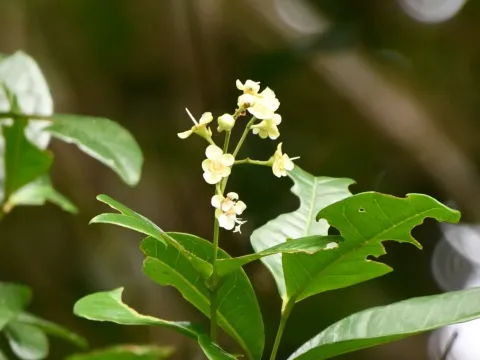
Bancroft's backhousia
Backhousia bancroftii
Bancroft's backhousia (Backhousia bancroftii) is an evergreen tree species belonging to the Myrtaceae family. It is native to the rainforests of northeastern Queensland, Australia, where it is known for its distinct aromatic properties and ecological significance.
What the section contains
Bancroft's backhousia
The plant thrives in a tropical climate characterized by high humidity and consistent rainfall throughout the year. It requires deep, well-drained soils that provide adequate nutrients and moisture retention, mimicking the natural conditions of a forest floor.
Botanically, the species is distinguished by its dark green, leathery leaves which possess internal oil glands. It is a slow-growing tree that requires protection from harsh winds and direct exposure to extreme temperature fluctuations to maintain optimal health.
Cultivation practices involve site selection with partial shade to prevent heat stress, especially during the early stages of plant development. Mulching is recommended to stabilize soil temperature and enhance the organic content of the growing substrate.
Regular monitoring of irrigation is crucial as the species does not tolerate waterlogged conditions, despite its preference for humidity. Balanced fertilization, particularly with trace elements, is recommended to support the synthesis of essential oils in the foliage.
The primary economic use of Bancroft's backhousia is the harvesting of foliage for the extraction of specialty essential oils. These oils are valued for their complex chemical profile, which is highly sought after by the perfume and pharmaceutical sectors.
Yield management revolves around strategic pruning techniques designed to encourage vegetative growth. By regulating the canopy structure, growers can ensure a continuous supply of fresh leaves while facilitating efficient harvesting operations.
Productivity is measured by the total biomass of leaves produced per hectare, followed by the specific yield of essential oil per unit of raw material. Advanced distillation methods are employed to extract high-purity oils that meet international standards.
The sustainability of the crop depends on maintaining soil health and preventing nutrient depletion over successive harvest cycles. Integrated pest management (IPM) is utilized to control common foliage-feeding insects without compromising the quality of the essential oils.
As interest in sustainable, plant-derived aromatic compounds increases, Bancroft's backhousia represents a viable niche crop. Ongoing research into its horticultural requirements continues to refine cultivation protocols for higher yields and oil quality.