
Crimson bottlebrush
Callistemon citrinus (Curtis) Skeels
Description
Growing requirements
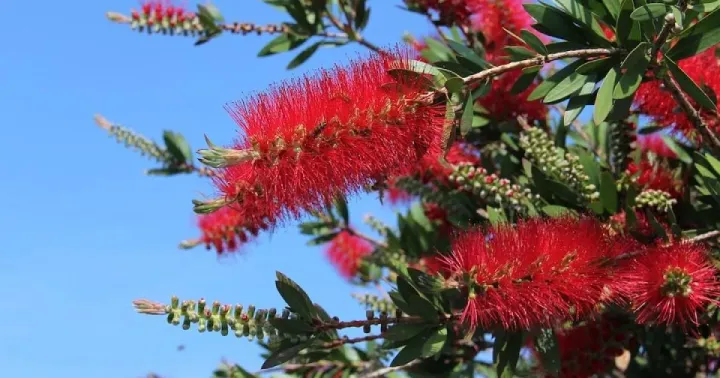
The Crimson bottlebrush (Callistemon citrinus) is a prominent member of the Myrtaceae family. Native to the eastern states of Australia, this evergreen shrub is widely cultivated globally for its spectacular flower spikes, which consist of numerous vibrant red stamens.
Botanically, the plant is characterized by its narrow, lance-shaped leaves that emit a distinct citrus fragrance when crushed. The inflorescences act as a powerful attractor for pollinators, particularly honey-eating birds and insects, which play a crucial role in its natural reproductive cycle.
Regarding climate requirements, this species thrives in full sunlight, which is essential for ensuring robust flower production. While it can withstand light frosts, it is primarily suited for Mediterranean or subtropical climates; in cooler zones, it must be overwintered indoors.
The ideal soil profile for Callistemon citrinus consists of acidic to neutral, well-draining media. It is important to avoid heavy, waterlogged soils, as the root system is prone to hypoxia and subsequent fungal decay if water retention is too high.
Agrotechnical management primarily involves pruning immediately after the flowering period. This practice prevents the plant from becoming leggy and promotes a denser branching pattern. Fertilization should be focused on low-phosphorus feeds, as many Australian native plants are sensitive to high phosphorus levels.
Main diseases and pests
The most common pests affecting this crop include spider mites, mealybugs, and scale insects, which often thrive in indoor or glasshouse environments. Furthermore, root rot caused by Phytophthora species can occur if irrigation management is poor or drainage is inadequate.