
Brazilian guava
Psidium guineense
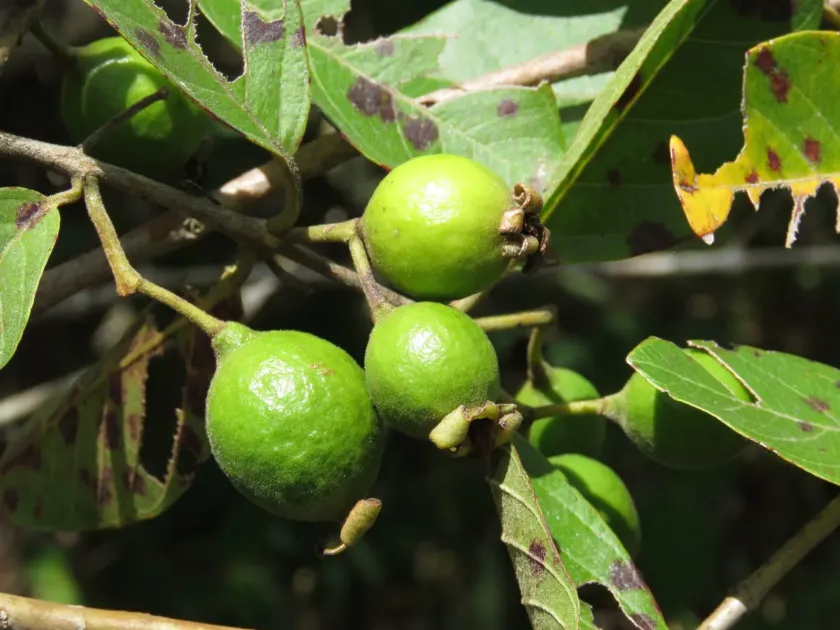
Description
Growing requirements
Brazilian guava, or Psidium guineense, is a shrub or small tree belonging to the Myrtaceae family, native to the tropical regions of Central and South America.
The plant thrives in warm, humid climates and is highly sensitive to frost, which limits its commercial cultivation to frost-free tropical and subtropical zones.
For optimal development, this crop requires well-draining soil with a slight to moderate acidic pH, as it does not tolerate waterlogged conditions that can cause root decay.
It prefers full sun exposure to ensure proper flowering and fruit set, though it can tolerate some shade during the early stages of its development.
A consistent moisture supply is crucial, especially during the fruit-bearing season, as water stress can lead to premature fruit drop and reduced yield quality.
Yield
The primary use of Brazilian guava is for its edible fruit, which is rich in flavor and is widely consumed fresh or processed into jams, jellies, and beverages.
Productivity is influenced by tree management, including selective pruning to maintain a manageable canopy and stimulate the production of new fruiting wood.
In addition to the fruit, the plant holds value in local medicinal traditions, with extracts from leaves and bark being investigated for their antimicrobial properties.
Industrial processing of the fruit provides a stable income source for farmers in its native range, contributing significantly to local agricultural economies.
As consumer interest in exotic and nutrient-dense fruits increases, the potential for expanding the market for Brazilian guava continues to grow globally.
Main diseases and pests
Fruit flies represent a major threat to commercial crops, as they cause significant damage to ripening fruit, often resulting in complete loss of specific harvests.
Pests like mealybugs and scale insects can infest leaves and stems, sucking plant sap and leading to stunted growth or increased vulnerability to fungal diseases.
Anthracnose is a common fungal disease that affects both leaves and fruit, particularly in humid conditions, necessitating proper crown ventilation and sanitary practices.
Proper field hygiene, including the removal of fallen or rotting fruit from the orchard floor, is essential to break the life cycle of common agricultural pests.
Integrated Pest Management (IPM) strategies, which prioritize natural predators and minimal chemical intervention, are recommended for maintaining long-term orchard health.