
Sarmentose fig
Ficus sarmentosa Buch.-Ham. ex Sm.
Description
Growing requirements
The Sarmentose fig (Ficus sarmentosa) is a perennial evergreen plant belonging to the Moraceae family. It is typically found in climbing or trailing growth forms, often acting as a significant component of the understory vegetation in Asian rainforest ecosystems.
Native to a vast region spanning the Himalayas, China, and Southeast Asia, this species thrives in environments with high ambient humidity and filtered sunlight. It is well-adapted to rocky habitats and forest edges, where its adventitious roots provide stable attachment to substrates.
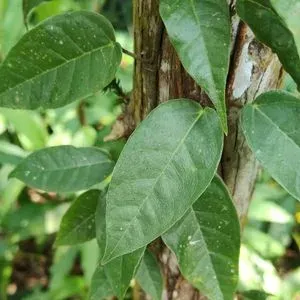
Botanically, Ficus sarmentosa is characterized by its flexible, elongated stems and distinctively textured leaves. Its growth habit allows it to function effectively as a ground cover or a climbing plant, provided there is adequate support and space for expansion.
In terms of cultivation, it requires nutrient-rich, moisture-retentive, yet porous soils. Consistent watering is essential, as the plant does not tolerate prolonged drought, although it equally suffers from waterlogged conditions that induce root rot.
Historically and ethnobotanically, this fig has been utilized for various traditional medicinal purposes in its native range, including topical applications. In modern horticulture, it is valued for its resilience and ability to green vertical structures in greenhouse settings.
Main diseases and pests
The primary threats to Ficus sarmentosa in agricultural or horticultural settings include infestations by spider mites and scale insects, which proliferate in environments with low air humidity.
Fungal pathogens represent another significant risk, particularly root-infecting fungi that thrive in over-saturated potting media or soils with poor drainage capabilities.
Leaf spot diseases, often caused by stagnant air and moisture trapped on the foliage surface, can lead to significant defoliation if left untreated during the growing season.
Preventive strategies involve maintaining adequate spacing between plants to ensure proper air circulation and implementing integrated pest management techniques.
Monitoring for signs of chlorosis or irregular spots on the leaves is vital for early detection of nutrient deficiencies or biological pathogens that could compromise plant health.