
Umbrella fig
Ficus umbellata Vahl.
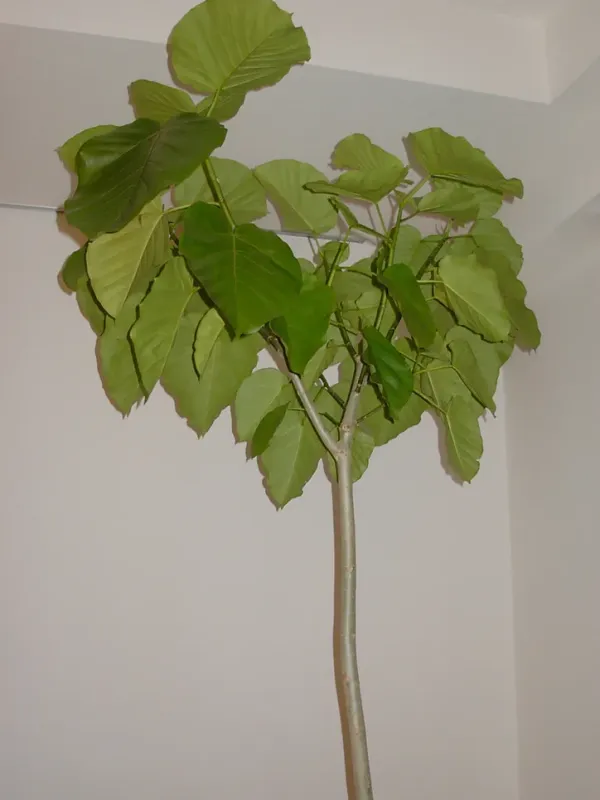
Description
Growing requirements
The Umbrella fig (Ficus umbellata) is a distinguished member of the Moraceae family, known for its large, heart-shaped, and deeply veined foliage. Native to the tropical rainforests of West and Central Africa, it thrives in environments that mimic its natural habitat.
In cultivation, the species requires consistent environmental conditions to maintain its structural integrity and leaf health. It prefers bright, indirect light, which encourages healthy leaf size and prevents the stems from becoming thin and leggy.
Temperature management is critical for this species. It performs best in temperatures ranging from 20°C to 26°C. Any exposure to cold drafts or temperatures falling below 16°C can induce stress, often resulting in leaf drop and slowed vegetative development.
The substrate must be highly permeable to ensure good drainage. A mixture of peat, pine bark, and perlite is often recommended to allow oxygen to reach the roots while maintaining enough moisture for consistent metabolic processes.
Regular fertilization during the active growing season is essential for the production of its characteristic large leaves. A balanced liquid fertilizer, diluted to half-strength, should be applied monthly to provide necessary macro and micronutrients.
Main diseases and pests
Spider mites are the most common pest associated with the Umbrella fig, particularly in environments with low ambient humidity. These pests feed on cell sap, leading to the appearance of pale spots and eventually drying out the entire leaf surface.
Scale insects are another primary concern, often found hiding along the veins of the leaves or the nodes of the stems. Their presence is marked by small, raised brown bumps that can be scraped off but require systemic treatment to eradicate completely.
Root rot remains the most serious threat caused by improper watering practices. When the soil remains waterlogged for extended periods, the root environment becomes anaerobic, promoting the growth of fungi that cause irreversible tissue damage.
Leaf yellowing can be a symptom of various issues, ranging from inconsistent watering to nutrient deficiencies. It is important to diagnose whether the yellowing is localized or uniform to determine if the cause is biotic or abiotic.
Proactive management includes cleaning leaves regularly to ensure optimal photosynthesis and inspecting the undersides of leaves for any sign of infestation. Utilizing sterile pruning tools when removing dead or damaged leaves prevents the spread of pathogens.