
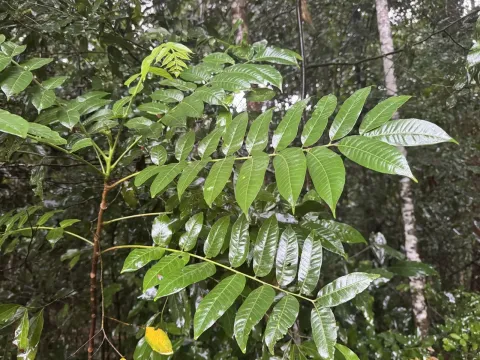
Dysoxylum
Dysoxylum
Dysoxylum is a genus of evergreen trees belonging to the Meliaceae family. These plants are native to the tropical and subtropical regions of Southeast Asia, Australia, and the Pacific Islands, where they play a vital role in forest structure and local biodiversity.
What the section contains
 Dysoxylum arborescens
Dysoxylum arborescens
Dysoxylum arborescens
 Dysoxylum brassii
Dysoxylum brassii
Dysoxylum brassii
 Dysoxylum cauliflorum
Dysoxylum championii
Dysoxylum championii
Dysoxylum crassum
Dysoxylum crassum
Dysoxylum cauliflorum
Dysoxylum cauliflorum
Dysoxylum championii
Dysoxylum championii
Dysoxylum crassum
Dysoxylum crassum
 Dysoxylum cyrtobotryum
Dysoxylum cyrtobotryum
Dysoxylum cyrtobotryum
 Dysoxylum densiflorum
Dysoxylum densiflorum
Dysoxylum densiflorum
 Dysoxylum excelsum
Dysoxylum flavescens
Dysoxylum flavescens
Dysoxylum excelsum
Dysoxylum excelsum
Dysoxylum flavescens
Dysoxylum flavescens
 Dysoxylum gotadhora
Dysoxylum grande
Dysoxylum grande
Dysoxylum inopinatum
Dysoxylum inopinatum
Dysoxylum kaniense
Dysoxylum kaniense
Dysoxylum gotadhora
Dysoxylum gotadhora
Dysoxylum grande
Dysoxylum grande
Dysoxylum inopinatum
Dysoxylum inopinatum
Dysoxylum kaniense
Dysoxylum kaniense
 Dysoxylum latifolium
Dysoxylum latifolium
Dysoxylum latifolium
 Dysoxylum macrocarpum
Dysoxylum macrocarpum
Dysoxylum macrocarpum
 Dysoxylum malabaricum
Dysoxylum malabaricum
Dysoxylum malabaricum
 Dysoxylum parasiticum
Dysoxylum parasiticum
Dysoxylum parasiticum
 Dysoxylum pettigrewianum
Dysoxylum rigidum
Dysoxylum rigidum
Dysoxylum stellatopuberulum
Dysoxylum stellatopuberulum
Dysoxylum pettigrewianum
Dysoxylum pettigrewianum
Dysoxylum rigidum
Dysoxylum rigidum
Dysoxylum stellatopuberulum
Dysoxylum stellatopuberulum
 Garlic wood
Dysoxylum alliaceum
Garlic wood
Dysoxylum alliaceum
 Kohekohe
Dysoxylum spectabile
Kohekohe
Dysoxylum spectabile
 Rose mahogany
Dysoxylum fraserianum
Rose mahogany
Dysoxylum fraserianum
Dysoxylum
Successful growth of Dysoxylum requires deep, nutrient-rich soils that possess excellent drainage capabilities. As tropical species, they are highly dependent on high ambient humidity and consistent rainfall throughout the year to maintain their metabolic processes.
Botanically, Dysoxylum species are characterized by their pinnate leaves and often fragrant flowers, which contribute to the unique aroma of the rainforest floor. They require a stable temperature environment, as they lack significant tolerance for frost or prolonged cold snaps.
Cultural requirements involve maintaining sufficient space for canopy development, as these trees are often shade-tolerant in their juvenile stages but demand higher light levels as they approach maturity. Proper site selection is key to achieving optimal height and stem diameter.
The economic value of the genus is primarily linked to its high-quality timber. The wood is widely utilized in fine woodworking, furniture manufacturing, and construction, valued for its durability, workability, and rich aesthetic appearance.
In their native environments, these trees face pressure from specific wood-boring insects and various fungal pathogens that thrive in warm, humid conditions. Preventive silviculture practices, such as clearing debris and monitoring for early infestation, are essential.
The greatest threat to Dysoxylum populations remains habitat destruction due to deforestation and land-use changes. Conservation efforts are currently focusing on protecting existing stands to prevent the loss of genetic diversity within the genus.