
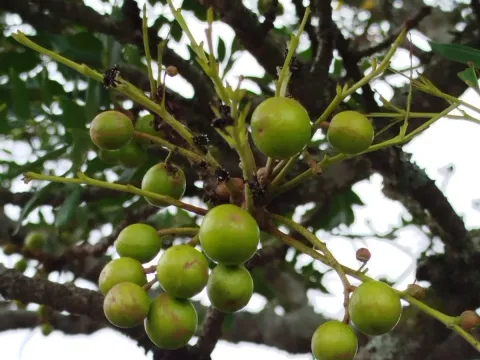
Ekebergia
Ekebergia
Ekebergia is a genus belonging to the Meliaceae family, featuring evergreen or semi-deciduous trees native to sub-Saharan Africa. The most well-known species, Ekebergia capensis, is widely recognized for its attractive canopy and high ecological value in its native habitats.
What the section contains

Ekebergia
The tree thrives in warm, tropical, and subtropical climates. It is best adapted to regions with consistent warmth and a balanced rainfall pattern. While tolerant of some seasonal variation, it performs optimally in areas with deep, nutrient-rich soils that offer excellent drainage.
Regarding soil requirements, Ekebergia prefers deep loamy soils that can support its extensive root system. It is sensitive to waterlogged conditions, which can lead to rapid decline in health. Therefore, site selection should prioritize areas with natural slope or engineered drainage.
Agrotechnical management primarily involves monitoring young trees during their establishment phase, ensuring they receive adequate water and protection from competitive weeds. Once established, the tree is relatively hardy and requires minimal intervention aside from periodic pruning to maintain shape.
The economic significance of Ekebergia spans across forestry and traditional medicine. Its wood is appreciated for carpentry and furniture making due to its quality and durability. Furthermore, the tree is a vital component in reforestation projects and urban landscaping initiatives.
Common threats to Ekebergia include fungal leaf spot diseases and root rot caused by poor soil aeration. To prevent these issues, it is essential to avoid planting in compacted soils and to ensure there is adequate distance between individual trees for air circulation.
Pest management focuses on controlling sap-sucking insects and borers that may infest the bark. Integrated pest management strategies, such as maintaining healthy tree vigor and removing infected branches, are usually sufficient to prevent significant outbreaks in managed stands.