
Dossinia marmorata
Dossinia marmorata
Description
Growing requirements
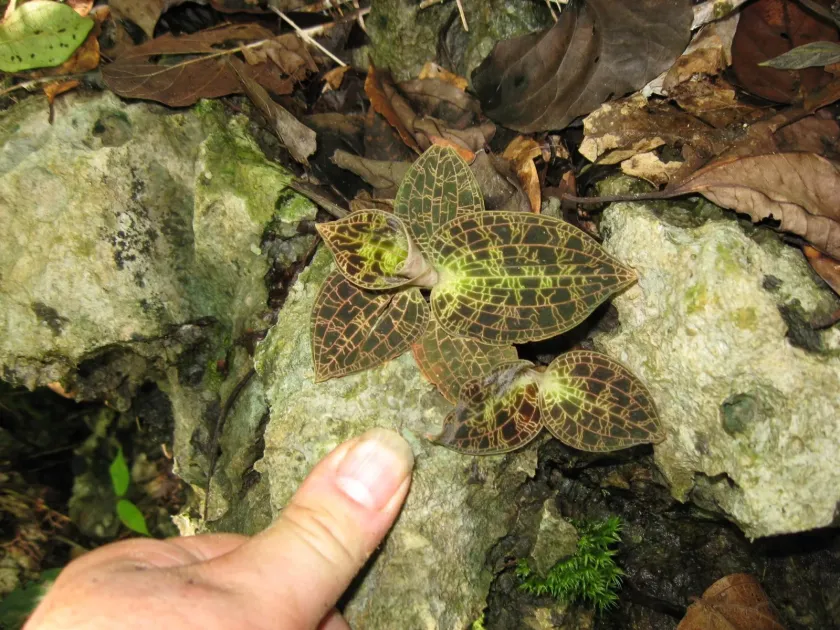
Dossinia marmorata, commonly known as a jewel orchid, belongs to the Orchidaceae family. It is a terrestrial orchid native to the rainforests of Borneo, specifically adapted to the deep shade and high humidity of the forest floor.
The plant is highly prized for its dark, velvety foliage marked with intricate, shimmering veins that range from gold to silver. Unlike many other orchids, this species is cultivated specifically for its stunning leaf aesthetics rather than its flowers.
Cultivation requirements necessitate a strictly tropical environment. The relative humidity should be maintained at a minimum of 70%, making this plant an ideal candidate for terrariums, glass cases, or specialized indoor plant cabinets.
The potting medium must be airy, acidic, and moisture-retentive. A mix consisting of long-fiber sphagnum moss, orchid bark, perlite, and charcoal works best to prevent soil compaction and ensure healthy root development.
Lighting should be kept low to moderate. As a plant naturally evolved to live in the shadow of the canopy, Dossinia marmorata will quickly scorch under direct sun, leading to permanent leaf damage and overall plant decline.
Main diseases and pests
The most common threat to this species is root rot caused by poor drainage or overly frequent irrigation. If the substrate remains waterlogged for too long, the root system will suffocate, leading to the rapid decline of the plant.
Pests such as spider mites are a major concern, especially in environments where humidity drops below the recommended threshold. These tiny pests suck the sap from the leaves, causing silvering or mottling on the foliage surface.
Mealybugs are another frequent visitor in indoor collections. They tend to hide in the axils of leaves or at the base of the stem, making them difficult to detect and remove without a thorough and regular inspection of the foliage.
Fungal infections can occur if water sits on the leaves or if there is no airflow around the plant. Proper ventilation is essential to ensure that leaves dry sufficiently and to prevent the colonization of pathogens on the velvety surface.
Management of these threats involves a proactive approach: regular cleaning of the terrarium, quarantine of new specimens, and the use of diluted, orchid-safe treatments if an infestation or infection is confirmed by visual symptoms.