
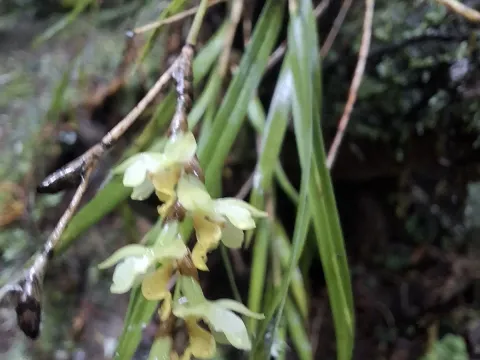
Earina
Earina
Earina is a genus of epiphytic and lithophytic orchids belonging to the Orchidaceae family. These plants are primarily native to New Zealand and several Pacific islands, where they have adapted to temperate rainforest climates with consistent moisture levels.
What the section contains


Earina
In their natural habitat, Earina plants grow on tree trunks or rock surfaces, obtaining nutrients from decomposing organic matter and atmospheric humidity. For successful cultivation, it is essential to replicate this high-humidity environment while ensuring excellent air circulation.
The optimal temperature for Earina growth ranges from 15 to 22 degrees Celsius. They require bright, indirect light, as direct sunlight can easily burn their leaves. Proper light management is crucial for the development of healthy shoots and subsequent blooming.
The potting medium for these orchids must be highly porous to support their epiphytic nature. A mixture of pine bark, charcoal, and sphagnum moss is commonly used to provide the necessary drainage, preventing the roots from suffocating in stagnant water.
The economic and practical use of Earina is centered on ornamental horticulture. Due to their attractive, scented flowers and unique growth patterns, they are highly regarded by professional orchid growers and botanical collectors for conservatory displays.
The primary threat to Earina health is fungal decay, often triggered by overwatering or poor ventilation in confined greenhouse spaces. Once roots begin to rot, the entire plant structure quickly weakens, leading to severe yellowing and eventual tissue collapse.
Pests such as scale insects and mealybugs are major threats, as they hide in leaf axils and feed on the plant's sap. These pests can rapidly proliferate if not detected early, necessitating the application of specialized horticultural oils or systemic pesticides.
Physiological stress, caused by inconsistent watering or the use of water with high mineral content, can lead to leaf deformation. Such plants become less resistant to environmental changes and are more prone to opportunistic pathogen infections.
Given their specific ecological requirements, Earina plants struggle in environments that do not mimic their native coastal or forest humidity levels. Failure to maintain these conditions results in stunted growth and a significant reduction in flower production.
Disease management involves regular inspections and maintaining clean growing surfaces to prevent the spread of bacteria. By ensuring a steady supply of fresh air and avoiding overhead irrigation, growers can significantly extend the lifespan of these delicate orchids.