
Comparettia ignea
Comparettia ignea
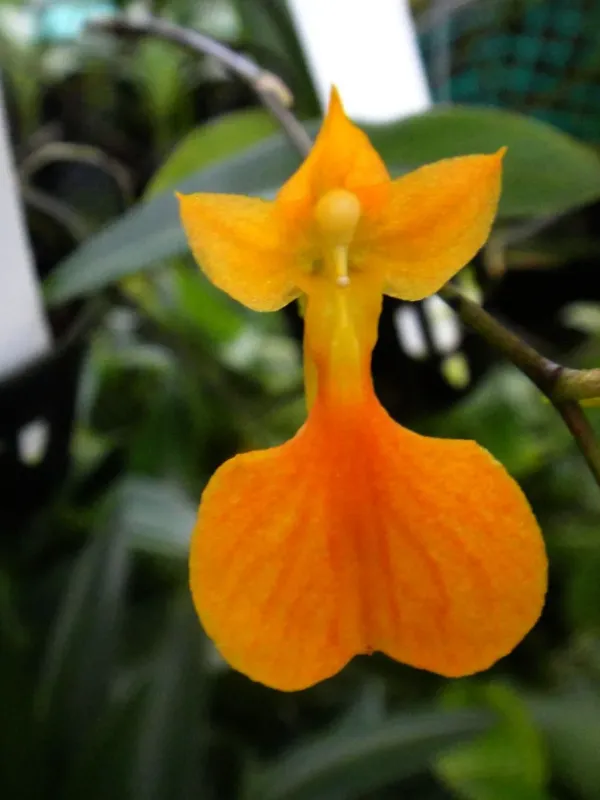
Description
Growing requirements
Comparettia ignea is a charming epiphytic orchid belonging to the Orchidaceae family. Native to the tropical regions of South America, it grows primarily in cloud forests where the air remains consistently humid throughout the year.
Successful cultivation requires a high relative humidity, ideally between 70% and 85%. In domestic settings, this often necessitates the use of a terrarium, a glass cabinet, or a dedicated humidification system.
The plant thrives in intermediate temperatures. A daytime range of 20°C to 25°C is ideal, paired with a significant night-time drop of at least 5-7°C. This thermoperiodism is essential for inducing healthy growth and successful flowering.
Bright, indirect light is necessary for this species. While it enjoys a high light intensity, its foliage is thin and susceptible to sunburn, so filtered light through a sheer curtain or under a canopy is highly recommended.
Due to its epiphytic nature, Comparettia ignea should never be grown in dense, water-retentive potting soil. Mounting on cork bark or using an open-basket culture with minimal sphagnum moss is the most effective method.
Main diseases and pests
Spider mites are the most common pest, especially in low-humidity environments. Regularly inspect the underside of the leaves and increase air humidity or use appropriate miticides if an infestation is detected.
Root rot is a major threat caused by overwatering or stagnant moisture around the root zone. Ensuring the roots dry out sufficiently between waterings is the primary defense against fungal decay.
Bacterial spot disease can occur if the plant is kept in an environment with poor air circulation. Proper ventilation prevents the buildup of moisture that leads to these infections.
Scale insects can occasionally affect this species. They are easily spotted as small, hard brown bumps on the leaves or pseudobulbs; they should be manually removed using a cotton swab dipped in alcohol.
Sensitivity to fertilizers is high, so it is recommended to use an orchid-specific fertilizer diluted to one-quarter of the manufacturer's suggested strength to avoid chemical burn to the roots.