
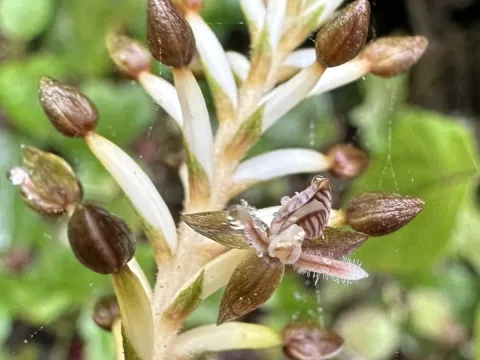
Cranichis
Cranichis
The genus Cranichis belongs to the family Orchidaceae. These herbaceous perennials are predominantly terrestrial, inhabiting humid forests across the Americas, ranging from Florida and the Caribbean to various regions in South America. They are known for their ability to thrive in the shaded environments of forest floors and mountain slopes.
What the section contains


Cranichis
Botanically, plants in this genus are distinguished by their basal rosette of leaves and a slender, upright spike of small, intricate flowers. Their root systems are often thick and fleshy, requiring a well-draining yet moisture-retentive medium. The morphological diversity of the flowers within this genus reflects their specialized evolutionary adaptations.
Successful cultivation requires replicating a humid, sheltered environment. These plants prefer bright but indirect light, as direct exposure can scorch their delicate foliage. Maintaining a consistent ambient temperature and high humidity is crucial for their development, which often makes them suitable candidates for greenhouse or vivarium environments.
The growing substrate should mimic the organic-rich composition found in their native habitat, typically consisting of bark, moss, and perlite to ensure optimal aeration. Watering must be precise, providing enough moisture to keep the roots hydrated without promoting rot. Fertilization should be mild and consistent throughout the active growth period.
In terms of economic and practical utility, Cranichis is primarily an ornamental crop for specialist orchid collections and botanical research. While not a large-scale agricultural commodity, it holds significant value in the horticultural industry for its rarity and exotic appeal, attracting enthusiasts dedicated to preserving and studying native orchid diversity.
Common threats to the genus include fungal and bacterial pathogens, which are primarily facilitated by poor air circulation and excessive moisture in the growing medium. Root rot remains the most frequent cause of plant mortality under domestic or greenhouse conditions.
Pests that typically affect orchids, such as spider mites, mealybugs, and scale insects, can also infest Cranichis. These pests feed on the plant's sap, weakening its structure and potentially transmitting diseases. Management involves regular monitoring, manual removal, and the judicious use of horticultural oils or insecticides where necessary.