
Comparettia falcata
Comparettia falcata
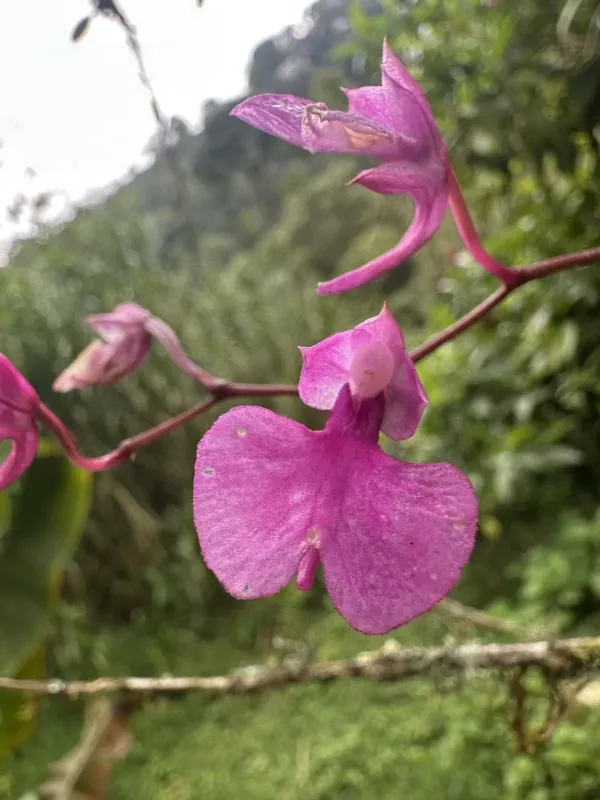
Description
Growing requirements
Comparettia falcata is a distinct species of epiphytic orchid belonging to the Orchidaceae family. Native to the Neotropics, this plant ranges from Mexico through the Caribbean to Bolivia, where it thrives in humid cloud forests at mid-to-high elevations.
Successful cultivation requires strict adherence to environmental parameters. High humidity, typically ranging between 60% and 85%, is essential for the plant to thrive. Because of this requirement, it is best kept in environments with controlled humidity, such as indoor greenhouses.
Temperature control is a critical factor for this species. It prefers intermediate to warm conditions during the day (22–26°C), but requires a significant drop in nighttime temperatures (down to 15–17°C) to simulate its natural habitat and promote healthy flowering cycles.
As an epiphyte, Comparettia falcata should be mounted on cork, bark, or fern slabs rather than grown in traditional potting soil. This mounting mimics its natural life on tree branches, ensuring the roots have access to ample airflow and preventing stagnation.
Regarding light, the plant needs bright, filtered light. Exposure to intense, direct midday sun will quickly cause leaf tissue damage. Proper placement involves positioning the plant where it receives consistent, diffused brightness throughout the day.
Main diseases and pests
The most common health issues for this orchid are fungal and bacterial infections caused by poor air circulation. When water lingers too long in the foliage or root zone without movement, rot can set in rapidly, leading to tissue decay.
Insect pests, specifically spider mites, pose a significant threat in dry conditions. These pests suck the moisture from the plant, leaving behind stippled leaves and a weakened structure. Regular inspection of the undersides of the leaves is advised.
Scale insects can also infest the plant, appearing as small, waxy bumps along the stems or leaf junctions. These should be treated immediately with horticultural oils or insecticidal soaps to prevent the spread of the infestation to other plants.
Poor water quality can lead to mineral toxicity, characterized by dark, scorched root tips and yellowing leaf edges. Using reverse osmosis or distilled water is highly recommended to keep the root system clean and functional.
Prevention involves maintaining a balance between moisture and airflow. If the plant is kept in a space with stagnant air, a small fan should be used to gently circulate air, which mimics the breeze of its natural tropical home and drastically reduces disease pressure.