
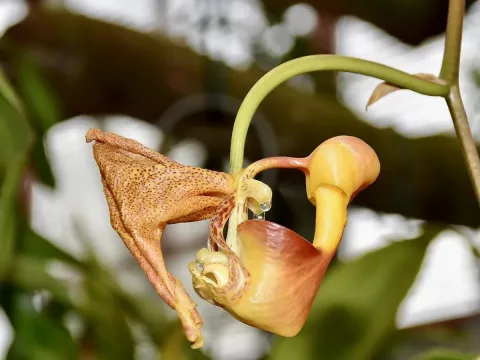
Coryanthes
Coryanthes
The Coryanthes, belonging to the Orchidaceae family, is a highly specialized epiphytic plant native to the tropical forests of Central and South America.
What the section contains


Coryanthes
Successful cultivation requires specific environmental conditions simulating tropical regions: air temperature should be maintained between +22 and +28°C, with humidity levels ranging from 70% to 90%.
The ideal substrate consists of a mixture of conifer bark, charcoal, sphagnum moss, and fern roots, which ensures superior drainage and proper aeration for the root system.
The plant thrives in bright, filtered light; direct sunlight is harmful and can scorch the delicate foliage and pseudobulbs, significantly impacting the plant's health.
The primary horticultural application is in specialized orchid collections and breeding, as Coryanthes is highly valued for its unique bucket-shaped flowers and complex pollination mechanisms.
The main threats to Coryanthes when cultivation practices are neglected include root rot, which is triggered by waterlogging in the substrate and low temperatures.
Pests pose a significant risk, particularly spider mites and scale insects, which proliferate rapidly in environments with low humidity levels.
Fungal infections on the leaves often develop due to poor air circulation, making regular ventilation of greenhouses or indoor growing areas essential.
Managing pest infestations requires the application of specialized systemic insecticides, which must be used strictly according to established protocols for orchids.
Disease prevention is achieved through routine inspection and the maintenance of an optimal moisture balance, avoiding both complete desiccation and excessive watering of the substrate.