
Smithiantha aurantiaca
Smithiantha aurantiaca
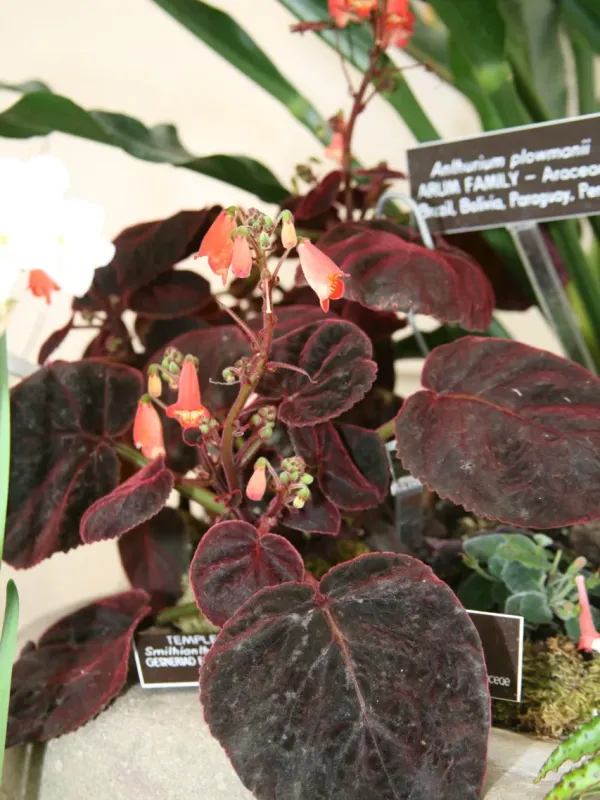
Description
Growing requirements
Smithiantha aurantiaca is an attractive ornamental species belonging to the Gesneriaceae family. Originating from the tropical regions of Mexico, this herbaceous perennial is widely recognized for its vibrant orange bell-shaped flowers and characteristic fuzzy, heart-shaped foliage.
To ensure optimal development, this culture requires bright, indirect light conditions. In its native habitat, it thrives in shaded understories, making it highly sensitive to direct sun exposure which can lead to rapid leaf scorching and stunted growth.
The preferred soil medium for Smithiantha must be porous, well-draining, and rich in organic matter. A mixture consisting of peat moss, perlite, and leaf mold is typically used to maintain the necessary acidity level and prevent compaction of the root zone.
Watering practices are essential for successful cultivation; the substrate should remain consistently moist during the active growing season but never waterlogged. High ambient humidity is vital for the health of the leaves, while keeping water off the foliage prevents potential rot.
The plant undergoes a natural dormancy period, during which the above-ground biomass dies back. During this phase, the scaly rhizomes should be kept in a cool, dry environment to ensure proper physiological preparation for the next growth cycle in the spring.
Main diseases and pests
The most common pests affecting this plant include spider mites and mealybugs, which thrive in low-humidity environments. Regular inspection of the undersides of the leaves is critical for early detection and mitigation of these infestations before they spread.
Root rot and fungal infections like Botrytis are major risks, usually caused by overwatering or poor air circulation around the plant. Proper agronomic management includes utilizing fungicides only when necessary and maintaining a balanced, well-ventilated growing environment.