
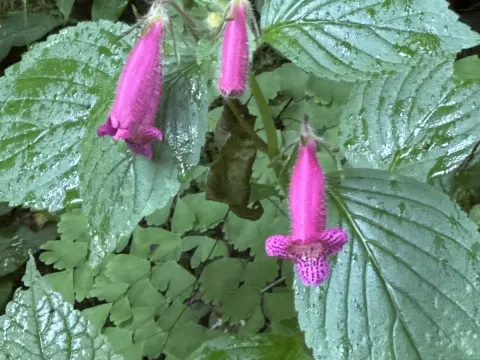
Seemannia
Seemannia
Seemannia is a genus of flowering plants belonging to the Gesneriad family (Gesneriaceae). Native to the tropical regions of South America, specifically the Andean countries, these plants are well-known for their unique adaptation to forest environments, featuring distinct seasonal growth patterns.
What the section contains

Seemannia
The botanical structure of Seemannia is characterized by scaly rhizomes, which allow the plant to survive dormancy periods. Their foliage is often lush and pubescent, while the inflorescences consist of tubular or bell-shaped flowers that appear in vibrant shades, making them popular among indoor plant enthusiasts.
Cultivation requirements demand a well-draining, porous soil mix, typically consisting of peat moss, perlite, and a small portion of organic loam. Proper aeration is essential, as the roots are highly sensitive to soil compaction and waterlogging, which can easily lead to irreversible damage to the rhizome system.
Seemannia thrives in bright, indirect light conditions. While it requires ample light for healthy foliage development and consistent flowering, direct midday sunlight should be avoided to prevent leaf scorch. A balanced environment with consistent temperatures between 20°C and 25°C is ideal for active growth periods.
During the dormant stage, the plant naturally sheds its aerial parts. During this phase, it is crucial to reduce watering significantly and keep the container in a cool area with temperatures ranging from 12°C to 15°C, ensuring the soil remains just slightly moist to prevent the rhizomes from dehydrating completely.
Root rot caused by overwatering is the primary threat to Seemannia. When the soil remains saturated for extended periods, anaerobic conditions develop, facilitating the growth of pathogens that attack the sensitive rhizomes, often resulting in the rapid collapse of the entire plant structure.
Spider mites are the most prevalent pests affecting Seemannia, particularly in environments with low relative humidity. These tiny pests feed on the underside of leaves, causing yellow stippling and eventual leaf drop, which can quickly diminish the plant's ornamental value if left untreated.
Mealybugs are another common challenge, often hiding in the tight crevices of the leaf axils or near the base of the stems. Their presence is marked by a cottony white substance, and they are capable of spreading rapidly if not addressed immediately with appropriate insecticide treatments.
Whiteflies can also infest Seemannia in poorly ventilated spaces. These insects suck sap and secrete honeydew, which serves as a medium for sooty mold growth, further hindering the plant's ability to photosynthesize effectively and leading to weakened growth and susceptibility to other stressors.
Integrated pest management is recommended to protect Seemannia. Regular cleaning of leaves, maintaining optimal humidity, and early detection of pests are key. In cases of severe infestation, the application of systemic insecticides or miticides, according to manufacturer instructions, is necessary to save the crop.