
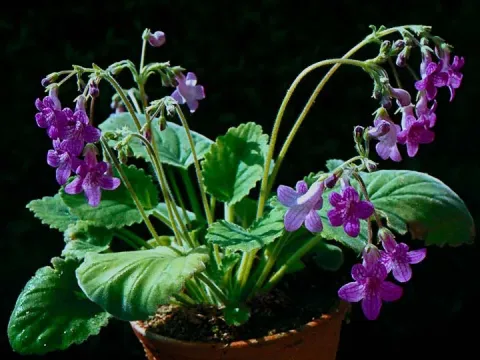
Opithandra
Opithandra
Opithandra is a genus of perennial herbaceous plants belonging to the Gesneriaceae family. Originating from East Asia, particularly China and Japan, these plants are typically found in rocky, shaded habitats within forest ecosystems, where they thrive in humid conditions.
What the section contains

Opithandra
Botanically, they are characterized by their basal rosettes of often-pubescent leaves and tubular or bell-shaped flowers that appear on delicate stalks. They are prized by plant enthusiasts for their aesthetic appeal and similarity to other popular gesneriads such as African violets or streptocarpus.
For successful cultivation, Opithandra requires bright, indirect light. Direct sunlight can easily scorch the leaves, so placing the plant in an east-facing window or providing filtered light is highly recommended to maintain its health and vibrant foliage color.
The soil should be well-draining, lightweight, and rich in organic matter. A mixture of peat moss, perlite, and a small amount of vermiculite creates an ideal environment for the roots, ensuring that moisture is retained without causing the soil to become waterlogged.
Temperature and humidity management is crucial. These plants prefer stable temperatures between 65°F and 75°F (18°C–24°C). High ambient humidity is beneficial, making them suitable candidates for terrariums or areas equipped with specialized household humidifiers.
Fungal issues such as root rot and gray mold (Botrytis) represent the most significant threat to Opithandra. These problems usually stem from overwatering or inadequate air circulation, which creates an environment where pathogens can proliferate rapidly.
Pests including spider mites and thrips may also attack the plant, especially if the air in the room is too dry. Regular inspection of the undersides of the leaves is essential to detect early signs of infestation and prevent damage to the plant's structure.
Control measures involve maintaining proper sanitation, which includes removing dead flowers and foliage immediately. If an infestation occurs, applying mild insecticidal soaps or horticultural oils can help manage populations without damaging the delicate plant tissues.
Salt accumulation in the substrate due to the use of hard water can lead to necrotic leaf margins. Always use filtered, distilled, or rainwater at room temperature to ensure that the mineral content does not interfere with the plant's delicate nutrient absorption processes.
Finally, avoid crowding the plants, as good airflow is a natural deterrent to many fungal diseases. Proper spacing in your indoor garden or greenhouse setting will significantly improve the long-term vitality of your Opithandra collection.